Abe Martin staff writer
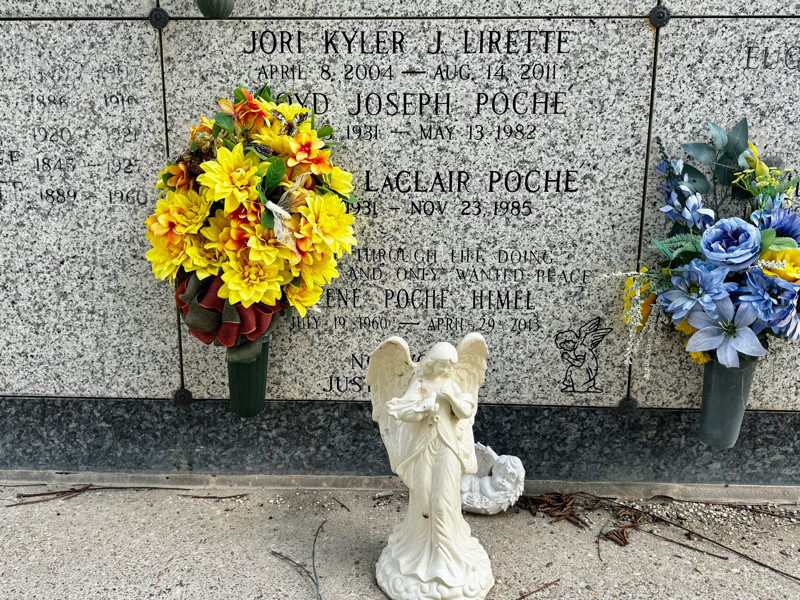
Seven-year-old Jori Lirette’s life was defined not by limitation, but by the people who loved him.
Jori, who lived in Thibodaux, Louisiana, with his mother Jesslyn Kylene Lirette and father Jeremiah Lee Wright. He had cerebral palsy and required constant care. To those closest to him, he was more than his condition. He was a child who meant everything.
“He meant so much to the people who were closest to him,” says Keith Magill, an editor at The Courier who helped cover the case at the time. “That’s what you try to understand when you’re telling a story like this, who that person was to others.”
On Aug. 14, 2011, that story took a devastating turn. Shortly after noon, a passing driver noticed something in the street outside a home on West Seventh Street. It was Jori’s head.
His body was found nearby outside the residence he shared with his mother and father.
Authorities say the child had been killed inside the home earlier that day after his mother left to run an errand, but before she returned.
Wright, 30 at the time, was arrested and charged with first degree murder. According to investigators, he later confessed.
Inside the newsroom, the story broke quickly.
“As soon as we heard it, it was like, ‘We’ve got to go,’” says Rick Portier, a reporter who was working at WAFB at the time. “That’s how it works. You drop everything.”
Within hours, reporters were on the road to Thibodaux, working phones, confirming details and preparing for what they might encounter.
“You start trying to prepare yourself,” Portier said. “You know you’re going to have to talk to people, ask questions and they’re hurting.”
When they arrived, the reality was worse than expected.
Even experienced journalists struggled to process the details as they emerged.
“I’d never heard anything like that before,” Portier says. “It was just… gruesome.”
“It’s not something you expect to see in a place like Thibodaux. That kind of thing, people think it happens somewhere else.”
Rick Portier
Police and emergency responders, who are often accustomed to traumatic scenes, were also visibly shaken, something reporters say is unusual.
“It’s not something you expect to see in a place like Thibodaux,” Portier says. “That kind of thing, people think it happens somewhere else.”
As coverage continued, the focus extended beyond the crime itself.
Reporters attempted to speak with neighbors and those close to the family, though many were not ready to talk.
“When you show up, it’s usually the worst day of someone’s life,” Portier says. “You try to be respectful. If they say no, you accept that and move on.”
Through those conversations, and even through silence, a picture of Jori began to emerge.
“You talk to the people who are willing to talk,” Magill says. “And you learn who this person was and what he meant to the people closest to him.”
The community response was immediate.
Shock turned into grief, and grief into anger as the details became public. Hundreds later gathered for Jori’s funeral, reflecting the depth of the loss felt across the area.
Online and in public, emotions ran high.
“There was a lot of anger,” Portier says. “People wanted justice right away.”
But inside the newsroom, the responsibility remained unchanged.
“You have to get it right,” Magill says. “You have to be fair.”
That responsibility extended even to difficult editorial decisions. In the days following the crime, one report included graphic details that drew immediate backlash from readers.
“It was a mistake,” Magill says. “We should have warned readers right away.”
For both journalists, the case remains one of the most difficult they have covered.
“You feel it,” Magill says. “But anything we felt has to pale in comparison to what the family went through.”
Portier says the job requires a level of separation in the moment.
“You block it out while you’re working,” he says. “You deal with it later.”
Jori Lirette’s story is often remembered for its tragedy.
But for those who worked to tell it, and for those who knew him, that is only part of it.
He was a child who required care, who was loved, and who mattered deeply to the people in his life. And in the end, that is the story they hoped would endure.