by Billi Gauthier
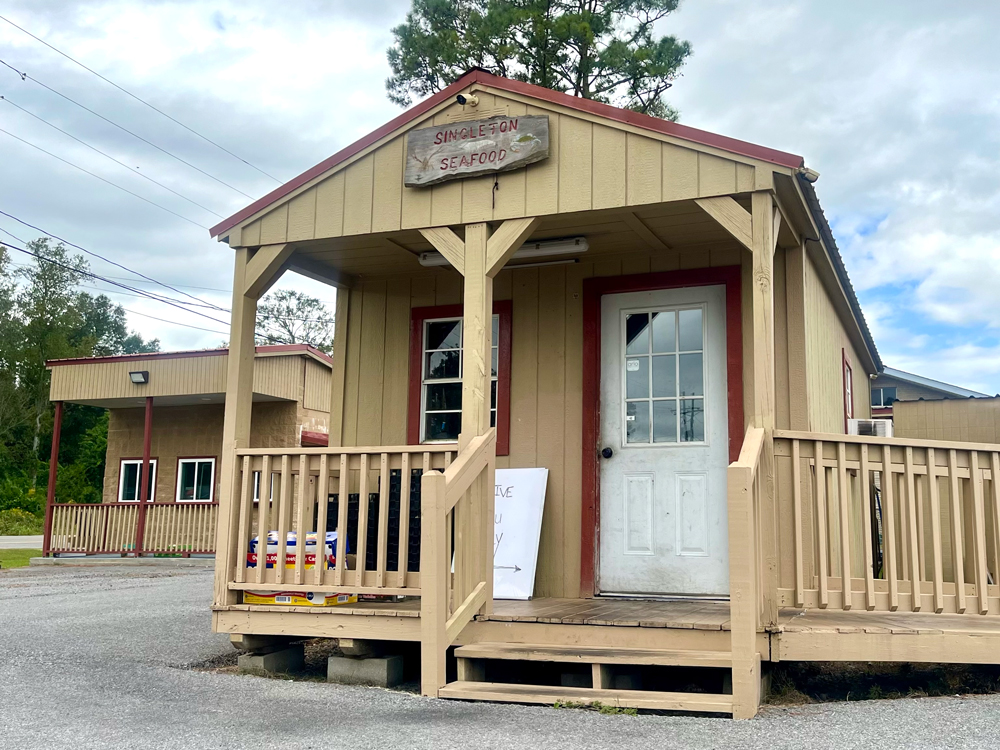
Schriever’s Singleton Seafood began as a dream on the roadside of West Park Avenue. Since the very beginning, that dream was fueled by the efforts of South Louisiana’s local fishermen.
“We’ve been doing this since 2015,” says restaurant owner Kyong Singleton. “We went out on the bayou just recruiting fishermen. I like local, and I rather it because of the quality. You can’t get no seafood as we have in South Louisiana, and that’s why I choose my fishermen.”
The symbiotic relationship between the two continued to flourish as the business grew. To this day, local fishermen sell their catches to Singleton, and Singleton makes her home-cooked specials for the community.
"I like local, and I rather it because of the quality. You can’t get no seafood as we have in South Louisiana, and that’s why I choose my fishermen."
Kyong Singleton
However, Louisiana is facing growing obstacles to the local seafood industry, threatening to shake the cultural cuisine that’s bound the community together. Michael Massimi, invasive species and marine programs coordinator for Barataria-Terrebonne National Estuary Program, says the single biggest impact on the local fisheries has nothing to do with ecology.
“All of those other forces are blown out of the water now because of cheap imports,” Massimi says. “ A farmed product will always be cheaper than a wild-caught one. They’re not dealing with boats, fuel, human resources and all of those things that go into a wild-caught fishery.”
And Singleton’s concerns about quality are valid according to the U.S. Government Accountability Office. The nonpartisan agency found that the FDA has not met its mandated target for inspections of the safety of imported foods, including seafood, since 2018.
Massimi described each impact on fisheries as “layers.” Coastal erosion is one, along with hurricanes and climate change as others. These stressors exist and present challenges, and Louisiana is becoming more resilient as a result.
“Katrina, if it did one thing, taught us to be smarter about how we build infrastructure,” Massimi says. “Make the ice houses resilient to the next storm and build them up a little higher. Give them more reinforcement. Make sure that the roads are repaired and make sure that your buildings are insured. In a lot of ways, the coast is better structured than it used to be because we are getting used to more frequent storms.”
Resilience is key, according to Massimi, and permits our community the ability to withstand harm and still function. The opposite, however, is vulnerability. The inability to continue once struck. What makes Louisiana vulnerable, according to Massimi, is environmental layers combined with the economy.
“Resilience is being chipped and chipped away,” he says. “Shrimp and crawfish are our go-to and it is part of our culture. It is a part of us. But you know, the fishery, the people who harvest these things, are a part of us too. They are the people who live in the lower parts of the estuary. We stand to lose them too.”
Ryan Blanchard
Boudreau & Thibodeau's Cajun Cookin'