
Loss of Homes
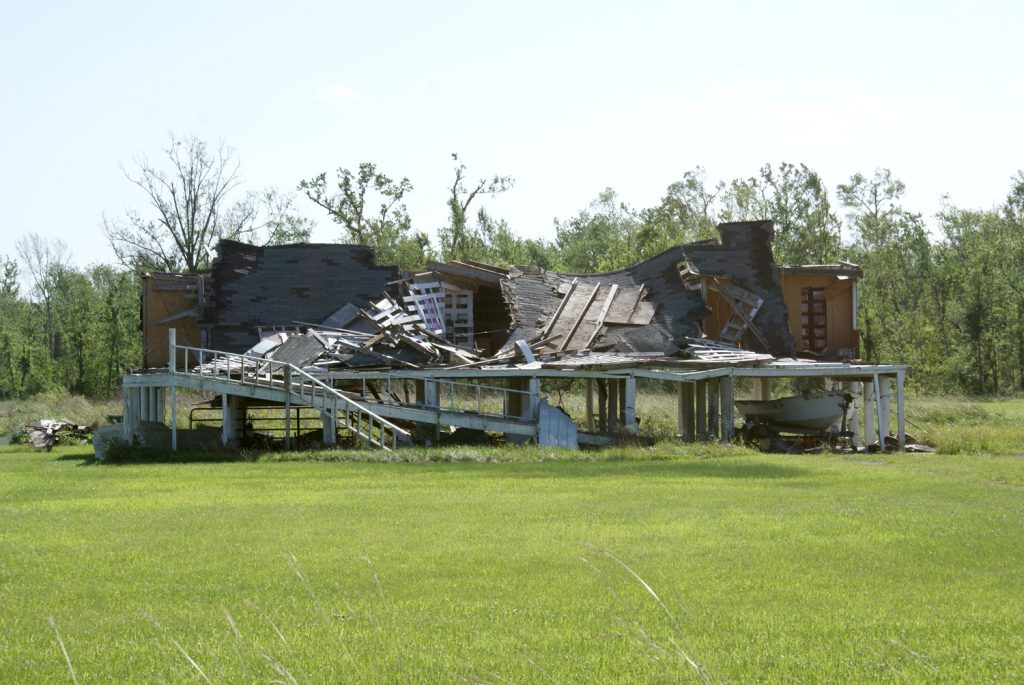
By Mikaela Chiasson-Knight, Managing Editor A home is more than a place of residence, they are places to find security, make memories and build lives. As Ida left the Bayou Region, it took stability from a countless number of families in South Louisiana. With so many buildings damaged and destroyed, residents are left scrambling to find new places to live. The Houma Highlands Apartments on Hollywood Road in Houma are among the many residential homes that Ida damaged. Stevie LeBouf and her family lived in Houma Highlands and their apartment was significantly damaged. LeBouf was not even allowed to return home to retrieve what was left of the family’s belongings. The apartment management “told us we couldn’t come back because of the ‘unknown damage,’ but they didn’t tarp our roof until three weeks after the hurricane,” LeBouf says “So every time it rained, our belongings would get more water damaged.” Another resident, Divine Martin, lost his apartment and had to make the sudden decision to move with his family to Colorado. “The most impactful thing is just being away from all of our family and friends that we used to see on a daily basis, but we’re making due,” he says. In some places, displaced residents live in tents outside their damaged homes. Others, like Taylar Rhodes, have had to relocate completely to another area. The Rhodes home of over 50 years had significant damage, causing her family to move to Shreveport. “My entire life was upended — from home, to work, to friends and family. We didn’t just lose our house; we lost our whole way of living,” she says. “Now we are in a new city; we have to find new jobs and new friends and new things to do on the weekends. So in some ways, we did lose everything. And in other ways, we gained a second chance to start fresh.” Another Houma Highlands resident, Brynn Duck, was forced to leave her undamaged apartment and live in a camper on a friend’s property. Duck is unsure how long she will be living there due to the lack of available housing in the area. According to Duck, mostly every complex office she’s spoken to is damaged. “Due to something in the camper’s electrical wiring, we don’t have power directly from the camper, and we’ve had to run extension cords from the house into the camper,” she says. “I can’t shower in the camper because we don’t have hot water, so I shower at my gym and I do laundry at a friend’s house. Inside the house is my roommate’s mom, grandma, cousin, his cousin’s wife, and their two kids. His cousin’s family also lost their apartment because of the storm, and they can’t find a place to live right now either.” Duck also lost a place of employment, The Intracoastal Club, due to severe structural damage. The Club hopes to reopen in the next few months after remodeling the entire venue. Residential areas are not the only ones suffering from Ida’s damage. Josh Sons, Managing Partner of MOS Real Estate, has seen severe damage to his company’s commercial and real estate properties. Sons is in charge of multiple rental properties; he is also responsible for dealing with insurance adjusters and contractors. “One of our commercial real estate buildings was a total loss, and we had to move locations, and several of our residential homes had to be gutted,” he says. “[The hardest part has been] dealing with our tenants and residential properties, trying to meet their needs. The heartbreak around having folks relocate and you can’t do anything to help them makes you feel helpless. But we can’t have them living in an unlivable situation.” https://youtu.be/dPdxm7mngyY A Personal Story “My entire life was upended — from home, to work, to friends and family. We didn’t just lose our house; we lost our whole way of living.” – Taylar Rhodes, Houma Resident
Donations & Help
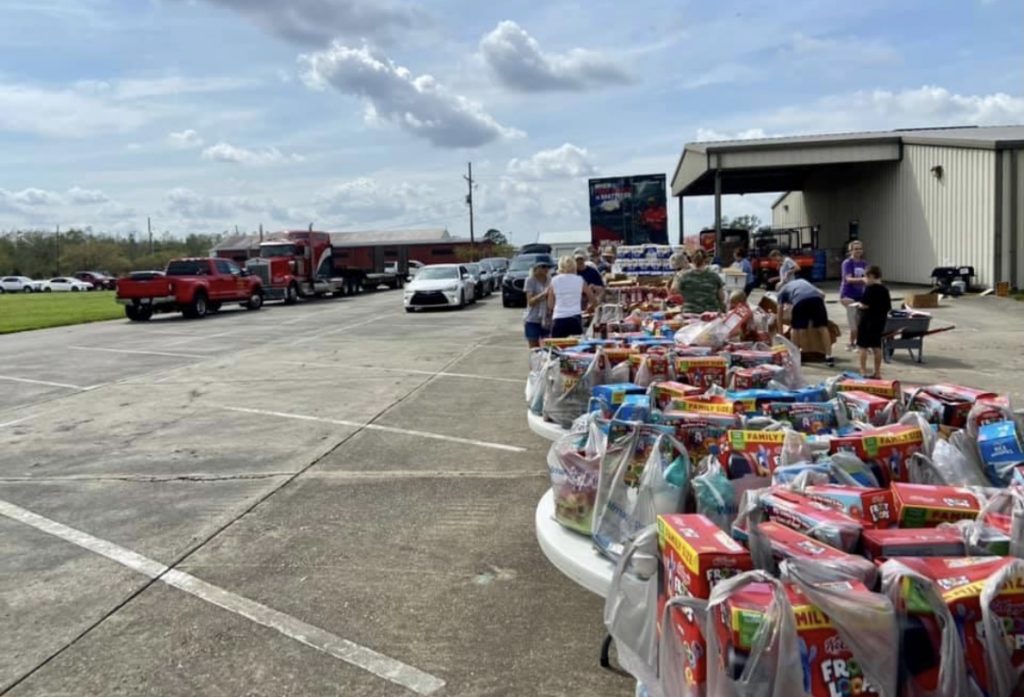
By Mikaela Chiasson-Knight Managing editor Even in times of devastation, the locals of Louisiana’s bayou region are vigilant about giving back to their communities. As soon as Hurricane Ida ripped through the area, people from all areas began helping those in need. “Even though so many people were struggling after the storm passed, it was awesome to see how many people were willing to step up and give back,” says Ben Bufkin, senior pastor at Living Word Church in Schriever. “The day after the storm, we were receiving messages from people asking how they could help.” Most people suffered loss themselves but were quick to give back to their neighbors. Houma local Diya Miller was one of the people who gave back even when she herself had lost. “It’s much easier to help others than to help myself,” she says. “I had lost my job the week prior, so I had free time. I’d call it a ‘hunting and gathering’ day. I’d bring home what myself and neighbors needed and deliver the rest.” “It’s much easier to help others than to help myself. I’d call it a ‘hunting and gathering’ day. I’d bring home what myself and neighbors needed and deliver the rest.” – Diya Miller Houma resident While local residents and businesses have given back to the community and provided people with essential needs, Louisiana has also received assistance from out-of-state and national organizations like Convoy of Hope. Convoy of Hope is an international non-profit organization “on a mission to feed the hungry and bring help and hope to communities that need it most,” according to their website. This organization reports supplying 3.5 million pounds of essential items to Louisiana after Ida. Some people, like Tondra and Emily Avet, even worked with donation drives when they personally lost their home in Chauvin. Though their family home is totaled, the mother-daughter duo did not hesitate to put neighbors first. For weeks now, Ward’s Club Citizen’s Club in Chauvin has transformed into a hub for all sorts of donations. Terrebonne Parish Councilman, Dirk Guidry, said in a press conference that Ward 7 has seen hundreds of cars daily since Sept. 3. Emily Avet, 18, has worked tirelessly at Ward 7 to provide her neighbors-in-need with essential items, while collecting items she and her family need as well. “It was crazy to see how many other states donated to us,” she says. “They gave us so much stuff from tissues, toilet paper, and napkins to feminine products, soaps and baby necessities and so many canned goods.” Many other groups, like Living Word Church, have been organizing donations as well. Bufkin, senior pastor, and his family stayed in the church while Ida made landfall and began arranging donations right after the storm passed. “We were blessed to have other state organizations sending us supplies,” he says. “I believe our numbers were around fifteen semi-trucks full of supplies. We had cooking teams out here every day serving hundreds of people.” Living Word Church member Manny Vera hosted a free-haircut event on multiple occasions after the storm since most salons were damaged, closed or had limited hours. Manny gave free haircuts to around 50 people. “I just asked myself ‘What can I do? How can I help?’” he says. “I love to cut hair and share the love of Christ, so we made it happen.” Miller had the chance to work with lots of locals and organizations like: The United Houma Nation, Church of Christ, even Youngsville musician David Cook. She was able to provide necessities for so many members of the community. “I truly believe in Karma and that’s the reason I had what I needed,” she says. “Including an excess of fuel, I could share with others.” PODCAST A campaign by the Lafourche Parish Sheriff’s Office to distribute supplies after Hurricane Ida. GardeVoirCi:Hurricane Ida · Season 5, Episode 8 – Operation Milkman with Major Renee Brinkley-Scott & Major Cortrell Davis
Loss of History
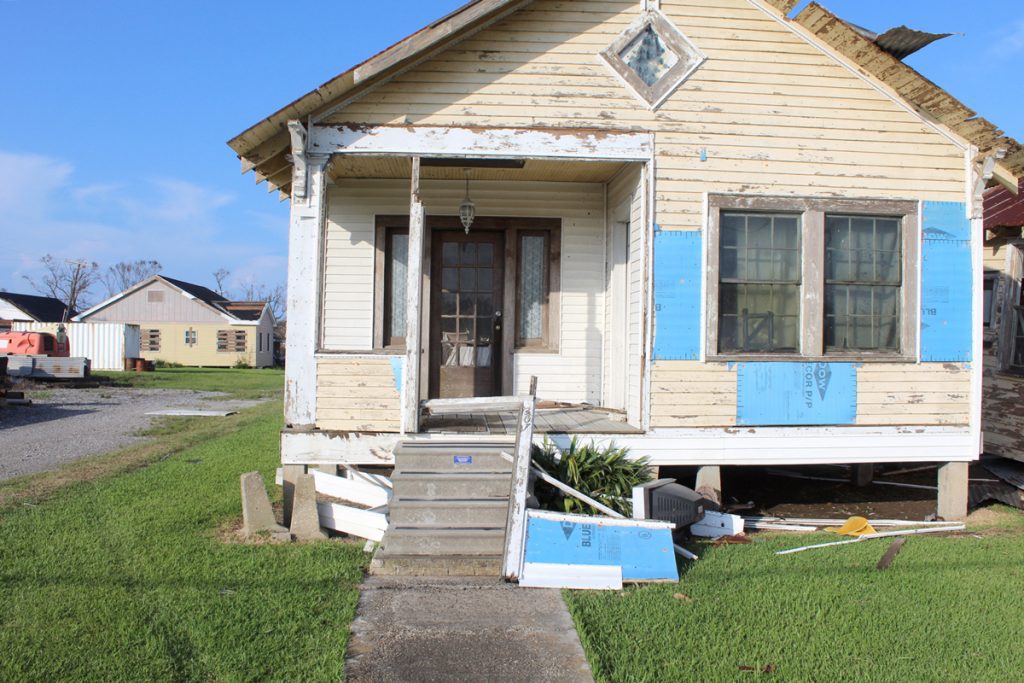
A Personal Story: Losing Homes & History By Dex Duet, Features editor Dollie Duet, a native of Golden Meadow, Louisiana, lost most of her belongings during Hurricane Ida. Her home, her vehicle, and her sense of peace, all washed away with Ida’s devastating fury. She is currently staying between friends’ and family’s houses waiting for assistance. It’s been two months since she’s had her own place. With the uncertainty of insurance and the effectiveness of FEMA, she is unsure of what that next step will be. It’s hard for her, for the people that are helping her, and for her family. Dollie’s story is like so many throughout the Bayou Region. Almost everyone lost something or knows someone who lost something. And so many lost everything. But unlike the countless others, this one is personal. My name is Dex Duet. I am the features editor for this semester’s edition of Garde Voir Ci and the son of Dollie Duet. When I signed up for this position, I wasn’t aware that the focus of our stories would be our stories. It went from research on lost communities to the conditions and status of the place you grew up in and the people you love. I was eager to take on this story, but sitting at a table with my mother and watching her cry was jarring. Unfortunately, this was the first time that she had a quiet moment to sit and think about what happened. There are so many people without a voice and not just because no one will talk to them. It is hard for the words to come out when the recovery isn’t done. So, here I sit with my strong-willed mother, letting her tell her story. Dollie has lived her whole life in Lafourche parish. She is the only girl in a family of four boys, so being tough is something she learned at a young age. Growing up, Dollie was fascinated by her own culture. Culinary skills are what drive the people in South Louisiana and she has those skills. The Cajun-French culture even has its own French dialect, which Dollie speaks fluently. Her love of the culture and cooking landed her in Nicholls State University’s culinary arts program. She spent two years there, but being a single mom and pursuing a full-time culinary career eventually became too much and she dropped out to focus on her family. Dollie then bought a nice home in Golden Meadow and began living the quiet life she always wanted. Years passed and at the age of 61, she decided to go back to college to get her degree in business. She finished in May of 2021, three months before her world was turned upside down. On August 28, 2021, my mother and I ran from Hurricane Ida by hopping in a car and heading to western Louisiana. We stayed in a little camp that a family friend owns. All six of us were huddled up, waiting to hear any news about our homes and loved ones. Half of my loved ones stayed behind, which is common with my family. They aren’t afraid of much, but this scared them. We kept in touch with them until the storm hit, but then there were two days of ominous silence. No one knew if our homes were still standing or if our loved ones were safe. “While we were sitting there away from the storm, we had relatives that we were keeping in touch with down the bayou,” Dollie says. “The whole time we were communicating we were talking on the phone. She was taking pictures of what was going on. Then all of a sudden I hear her say, ‘oh my god the house is rockin’ now.’ Then communication shut off. We didn’t know if they were still alive or what had happened. Trying to get in touch with anyone at that point was near impossible. All we wanted to do was get back, but we didn’t know what we were going to find.” “Then all of a sudden I hear her say, ‘Oh my god the house is rockin’ now.’ Then communication shut off.” – Dollie Duet After what felt like ages, one of our cousins called saying everything was okay and our house was still intact. I’m not sure if the house just looked okay from the outside or if she was trying to spare our feelings, but the house was not okay. Our home, the place I grew up in, the place where my mother and I made so many memories, was gone. My mom loved that house. The house was 110 years old with another house attached to the side. That building looked twice the age of the main one. My mom spent years trying to figure out what the building was or how old it was, but many didn’t know. While having a conversation with a historian from South Louisiana one day, he revealed the unknown facts about the building. This building was the first place in Golden Meadow that sold bus tickets. There was even a popular rumor that the building floated there from a previous hurricane. “One day a gentleman by the name of Lany Boudreaux (long-time area resident and bayou history buff) said, ‘I know how old that house is. The store part of that house floated there from the Caminada hurricane in 1911. They added to it then built the house connected to the store. The store was a grocery store and later they made an ice cream parlor with it.’” Dollie continues, “The little window where you can buy the bus tickets is still there. I kept it there until the storm took it.” When my mom moved in, she completely remodeled it with her own two hands and no help. One of her favorite things to say to the men in her family was, “I redid that house from the ground up and none of y’all put a single
First Responders
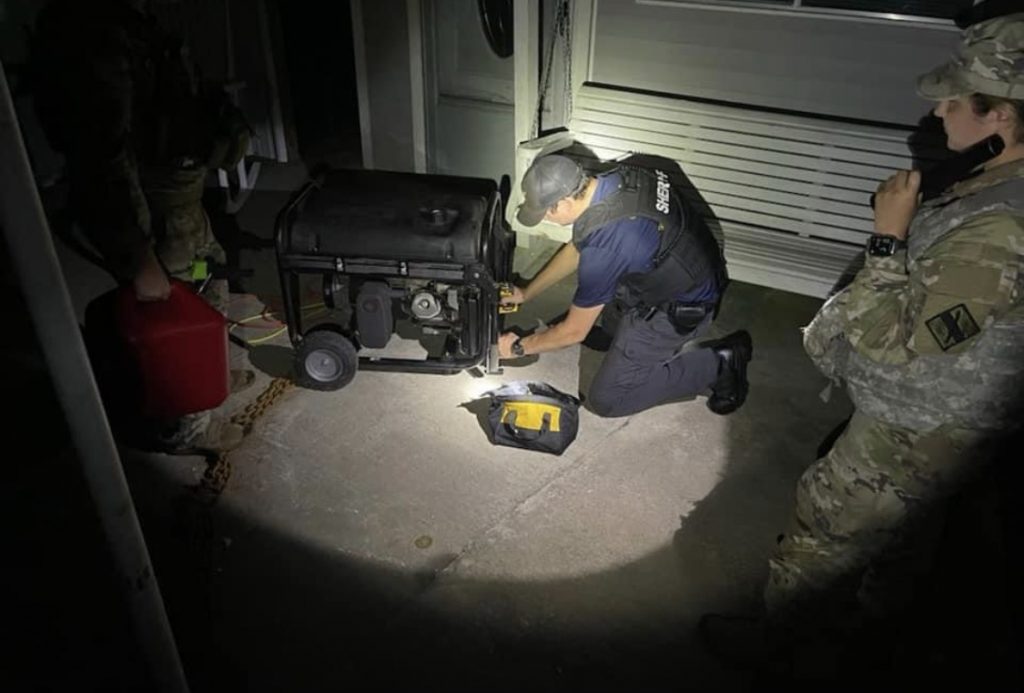
By Dex Duet, Features editor Under Hurricane Ida’s mandatory evacuations, most families in the Bayou Region packed up and left. But law enforcement officers prepared and then stood ready to face the brunt of the storm and the aftermath. “We’re in the middle of the storm working and they [other officers] get reports back that their home is gone,” says Lieutenant Travis Theriot of the Houma Police Department. “And they have nothing and they’re looking at you and telling you they only have the clothes on their back and the bag that’s packed in their unit. They show you pictures and everything is scattered all over the yard and all you can do is console them and then you look at them and they just put on their game face and go back to work.” “They have nothing . . . they only have the clothes on their back and the bag that’s packed in their unit . . . Then you look at them and they just put on their game face and go back to work.” – Lt. Travis TheriotHouma Police Department During the storm, Theriot responded to the local powerplant that was being blown away. Debris fell into the building, hitting the employees inside. Theriot and his crew rushed over in a large vehicle to save the employees that were trapped in the quickly dismantling building. In three separate trips, the team pulled 17 men out of the powerplant and brought them to safety at the Houma Civic Center. “I was crouched down watching the metal fly off the building right over my head,” Theriot says. Even everyday people joined the efforts. Chad Fitzmaurice, a resident of Porter, Indiana, was visiting South Louisiana for the alligator hunting season. But his alligator trip turned into a multi-week effort to help others. “We were knocking on doors where people were literally living in one room of their house because the rest of their house was gone,” he says. “They had tarps up just trying to protect that one room so they can live in it because they had nowhere to go. There was nothing.” Help was needed during the storm, but after the storm passed first responders jobs were far from over. Some residents were still trapped in flooded houses. People needed food, water, medical assistance and shelter. Those who evacuated needed clear roads to return home. Tony Boudreaux, the Thibodaux Volunteer Fire Department’s fire chief, says their concern was to ensure safe and clear roads for first responders and those trying to begin the restoration of their hometowns. “We had to let the storm pass through,” Boudreaux says. “The next thing was to coordinate an effort to get the roads cleared so if we do have an emergency, our emergency services can get where they need to get.” In addition to clearing roads, the Thibodaux Volunteer Fire Department helped individuals assess and clean up their homes, made sure power lines were not a danger to passing cars and provided the community with much-needed essentials. And while the storm passes through in a couple of days, the aftermath, cleanup and recovery are long. “After a storm like Ida comes through, things typically move slowly for the most hardest hit people,” he says. “That is difficult to see.” While dealing with Ida was difficult, Boudreaux says there was still good. “While you’re out assisting the community, you see people helping each other,” he says. “Neighbors helping neighbors — those are the things that become positive. The storm is the negative, but everyone coming together to help each other is the positive part of all of this.”
Omar Marquez
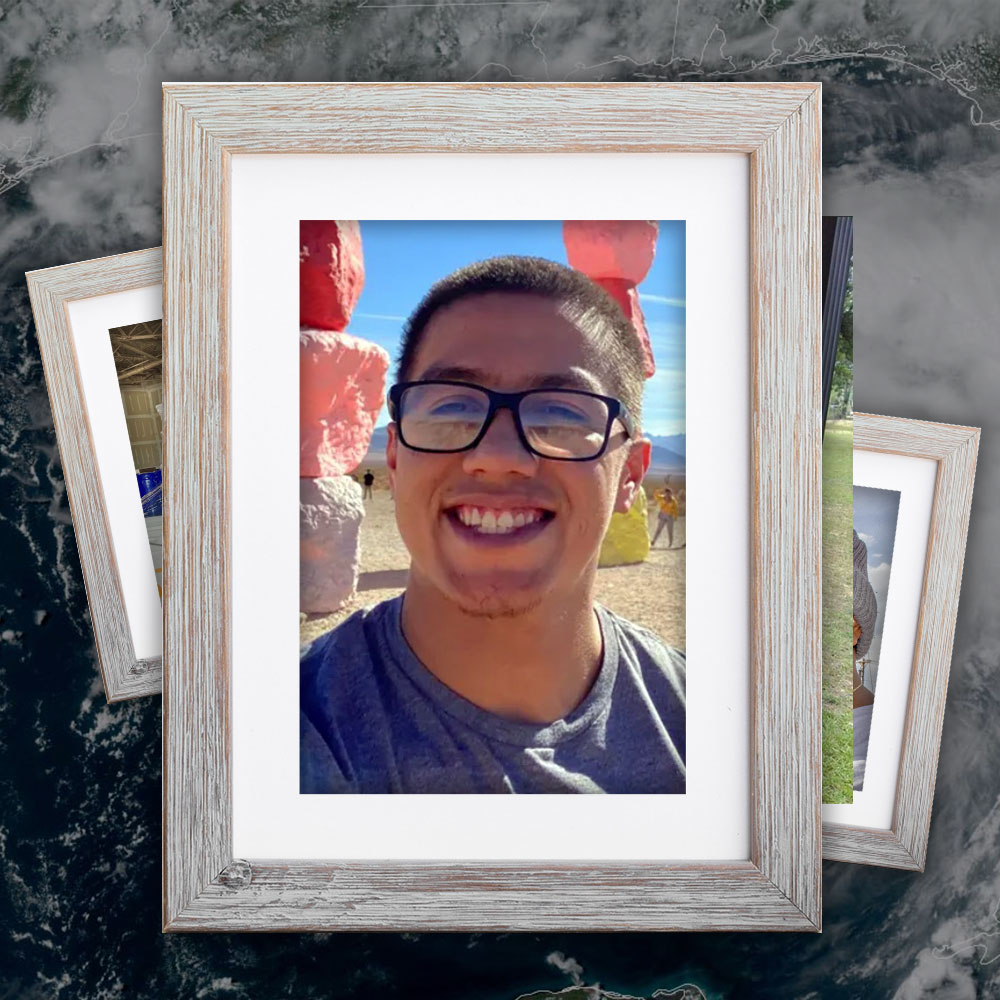
Military (Ventura, California) Evacuated What has been the hardest part for you living through and after Ida? “The hardest thing was the aftermath. It was hard to find supplies.” What do you think is the biggest loss from Ida? “My biggest loss honestly wasn’t much, but some of the other people at my unit were evicted from their apartments. The people evicted only had a few days to move out.” Listen
Shaina Curry

Thibodaux, Louisiana Evacuated to Austin, Texas What has been the hardest part for you living through and after Ida? “The hardest thing was how scared we were and how much my family were impacted by it.” What do you think is the biggest loss from Ida? “Our biggest loss was the amount of money that we spent because we never really got it back. Our fence fell also and we lost some of the siding.” Listen
Paige Naquin

Thibodaux, Louisiana Evacuated What has been the hardest part for you living through and after Ida? “The hardest thing was being away from family and friends.” What do you think is the biggest loss from Ida? “I had no biggest loss luckily”. Listen
Kirsten Hornback
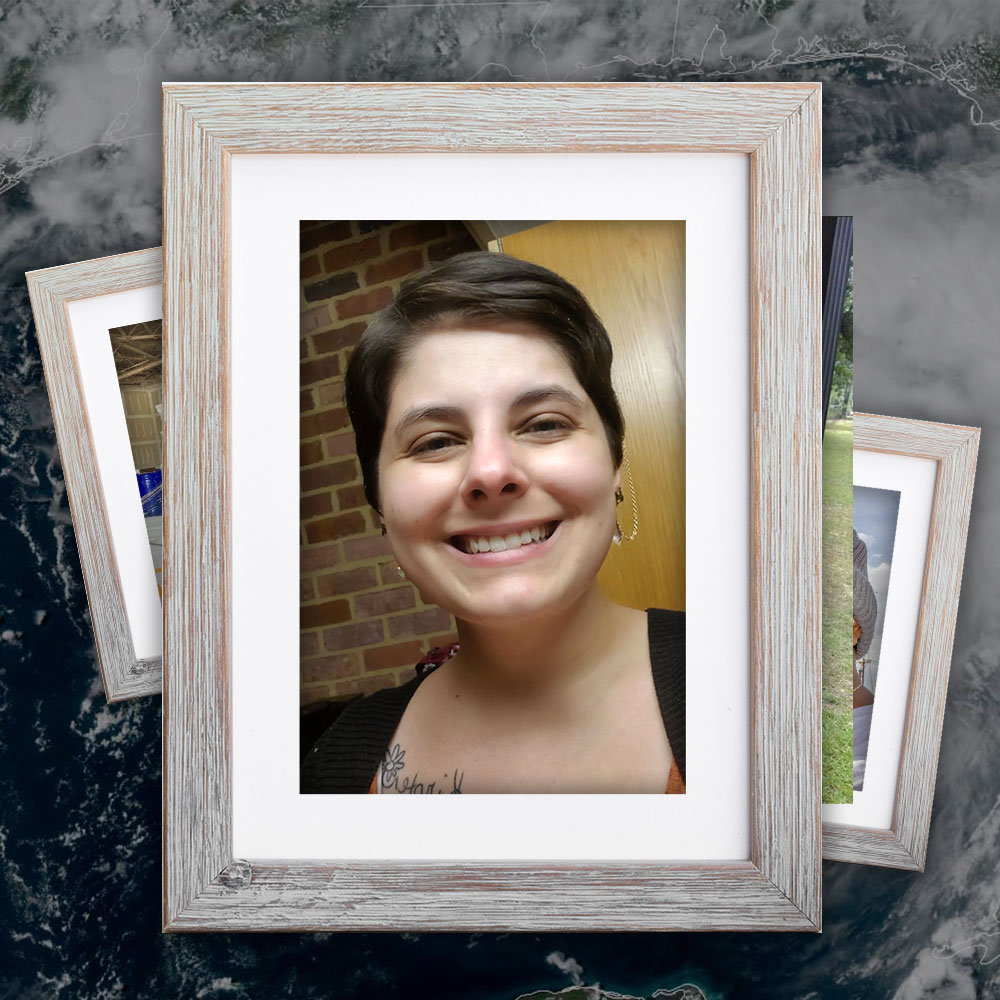
Galliano, Louisiana Stayed What has been the hardest part for you living through and after Ida? “The hardest thing was that there was no calm. There was constantly stuff flying around and it was constantly raining.” What do you think is the biggest loss from Ida? “Our biggest loss was that both of my parents lost their car.” Listen
James Arceneaux

Houma, Louisiana Evacuated to Lafayette, Louisiana What has been the hardest part for you living through and after Ida? “The hardest part for me was reading news reports and not knowing if our home was fine.” What do you think is the biggest loss from Ida? “Me and my family actually came out of the storm very fortunate unlike most people we knew. Me and my parents had minor damages. Even my grandparents who took the most amount of damage out of all of us lost only their awning. My grandparents also had some water make it into their home.” Listen
Aquindis Keyes

Labadieville, Louisiana Evacuated to Houston, Texas What has been the hardest part for you living through and after Ida? “Evacuating wasn’t so bad, but the hardest part during Ida was my grandparents staying behind. I didn’t know if they were okay.” What do you think is the biggest loss from Ida? “My family and I didn’t really have too much damage so the biggest loss was a fence being knocked down.” Listen