Education // Bayou Way of Learning

By Shaun Breaux, Features Editor Grand Bayou may not have been the biggest or most developed area, but for the people born and raised in this bayouside community, they made it work not only out of necessity, but because they enjoyed their way of life. “Being five miles away from everything, like the grocery store, church and school, we were kind of isolated in our own little beautiful community,” says Jessica Rousseau Baye, Grand Bayou native. “We had a wonderful childhood; we didn’t know that there was anything different to us.” Nell Aucoin Naquin, Grand Bayou native, says that although there may not have been many industrial places in the community, to them, there was a lot around. “I mean there was the great outdoors. The world was ours,” Naquin says. “We got to swim in the bayou everyday, we got to walk in the woods and look at all the animals and the creatures. We got to fish and supply our food from the animals, the land and the bayou. We grew our own food, so there was a lot to do and see.” Grand Bayou’s lone schoolhouse was abandoned in the 1930s. Once roads improved, children were able to travel or be picked up by bus to attend school five miles down the road in the nearby town of Paincourtville. Naquin says that old schoolhouse was where she was born and raised until she was about four years old. “My mom and my dad turned that house into our home. Eventually my momma bought that property and the building, tore the schoolhouse down and used the lumber from the schoolhouse to rebuild the house that I pretty much grew up in,” Naquin says. The children of Grand Bayou during Naquin’s childhood in the late 1950s attended St. Elizabeth’s School in Paincourtville about five miles away. They went to Catholic school until 7th grade and were taught by nuns. Baye says the Catholic foundation was essential for their education. Tuition for Baye and her siblings was $3 per person per month around this same time. Baye says for the four of them, that $12 was hard to come by. She says she remembered her parents struggling during some months, as Baye’s father worked as a small farmer on leased land. “Still, We always had a car, and we always ate well. I never felt poor, but when I became an adult, I knew we had been poor,” Baye says. From there, they attended 8th grade six miles away in Belle Rose and Assumption High in Napoleonville for high school 11 miles away. After high school, Naquin rode the public bus from Grand Bayou to Nicholls State University every day until graduation. Nicholls is located in Thibodaux, around 30 miles from Grand Bayou. Naquin says she knew a lot of Grand Bayou residents, herself included, who would not have been able to get a college degree if the parish would not have sent school busses to pick them up and bring them to Nicholls. She says she rode the school bus for her entire educational career and was thankful for the bus that picked them up every day. The generation before them had more than just a bus ride to endure. Baye says her mother went to school in Belle Rose, but it only went up to 11th grade. After graduation, her mother started teaching in Pierre Part, which she had to get to by boat. “My mother taught second grade with an 11th grade education. She was a very smart lady,” Baye says. Baye’s father only had a fifth grade education, but he continued to teach himself. “During the war, he was always reading Time Magazine and Newsweek Magazine, so he was self-educated. I think that when you’re in the war and you travel to other parts of the world that’s education in itself,” Baye says. The former residents of Grand Bayou talked about their childhood much like other rural communities of the 1950s. Yet unlike those communities, they had the bayou to explore, gaining an entirely different type of education and set of skills. Grand Bayou’s one-room schoolhouse before it closed in the 1930s. Grand Bayou’s one-room school class picture. St. Elizabeth School in Paincourtville about five miles from Grand Bayou. Previous Next

The Families // Settling Along Grand Bayou

Grand Bayou was just a few families with Acadian ancestry that collected together on the bayou. From the lineage of the largest of those families, the Rousseaus and Daigles, to the arrangement of their homes in the community, for those who lived in Grand Bayou, these details shaped everyday life.

The Settlement // How Grand Bayou First Came to Be

By Wes Rhodes, Staff Writer Gustave Joseph de La Barre, or “Gus,” as people called him, was born in 1864, and is considered the patriarch of Grand Bayou according to De La Barre: Life of a French Creole Family in Louisiana. The De la Barre family text says that Gus was a natural leader who could rally men into a business opportunity while joining them in partnership. Gus, the man who helped build Grand Bayou, adhered to the “living” principle. The principle stated that a “living” is not measured in money, but instead is measured in the way a man earns a livelihood, in harmony with family, life and needs. Gus spent his childhood traveling between Assumption Parish and New Orleans before his family settled in Assumption Parish at the age of 9. He did not receive much schooling, but this was not uncommon in the mid to late 1800s. As Gus grew into his teenage years, he taught himself how to read. In the 1880s, the lumber industry began to boom across the country, but especially in Louisiana. According to the Historic Context of the Louisiana Lumber Boom, in 1880 Louisiana was ranked 13th in the United States for the dollar value of its timber product. By 1900, the state was ranked 10th in the nation. The resurgence of the lumber industry prompted Gus, along with his brother Nelson, to start the Louisa Saw Mill in 1887. The De La Barre family text says that in 1891 the Louisa Saw Mill was bringing in enough income for the brothers to purchase a large piece of land to collect cypress tree lumber to haul back to the mill. By 1898, the Assumption Pioneer referred to Gus as, “Gus J. La Barre, the Grand Bayou sawmill king.” This was just the beginning for Gus’s claim to local fame, as he soon followed these accolades up by founding the settlement of Grand Bayou. Early residents of Grand Bayou consisted mostly of the sawmill workers and their families, but there was little in place for leisure. In 1905, Gus requested help from a business associate, Ulysse Hebert, to help create the first establishments in Grand Bayou, including the settlement’s first store. Jerry Rousseau, the grandson of Hebert, says his grandfather’s store was a one-stop shop that residents could go to and get almost anything they needed. “He sold anything and everything at his store,” Rousseau says. “He sold groceries. He sold clothes. He even sold literal iceboxes because back in those days they didn’t have refrigerators.” Hebert then built a dance hall, a casino and a moss gin. According to the De La Barre family text, by 1923 the small town added a bank, a school for children to attend grades one through four and a church, all which Gus de La Barre helped build and fund. Gus died in 1925, but left behind a community. Gustave de La Barre at his desk in Grand Bayou, c. 1910 The Labarre Brothers sawmill on Grand Bayou, c. 1900

Nell Aucoin Naquin

Current Hometown: New Orleans Naquin lived in Grand Bayou until she graduated from Nicholls and got married. Favorite Thing to Do There was a lady everyone called Aunt Lou, but she wasn’t everybody’s aunt. She would always manage to find stuff for the kids to do. My favorite thing to do in Grand Bayou was to spend time at Aunt Lou’s house with all the other kids. Favorite Memory My favorite memory of Grand Bayou came from fishing. As I was in a small boat only five feet off the bayou fishing for catfish, my mother was picking fresh potatoes, green beans and tomatoes from the garden. After preparing it all, she would come in with caught catfish and she would fry them up. That meal came completely from the bayou, and it was as fresh as it could possibly be. Just being able to catch our fish, grow our food and then sitting down and having one of those meals. Most Missed I miss fishing the most and being able to use and explore the bayou every day. Grand Bayou Traditions I keep the mindset and the lifestyle of Grand Bayou. There is something to be said about the simple, slow moving country type of life. I keep the mindset and the lifestyle of Grand Bayou. There is something to be said about the simple, slow-moving country type of life.

Jessica Rousseau Baye

Current Hometown: Labadieville Baye lived in Grand Bayou her whole life until she got married at 23. Favorite Thing to Do Playing with the other kids in the summer, whether we were playing baseball in the front yard or swimming in the bayou. Favorite Memory Learning how to swim in the bayou. Once we learned how to swim, if we were brave enough, we would swim the pocket back and forth before the bayou started. Who knew in those days that that small act would be so important to me. Most Missed I miss that I can never go home. Grand Bayou is Always With Us From Grand Bayou, faith carried over. Everyone still has strong faith and tries to send their children to Catholic school as long as we could. The community taught us how to be compassionate. [Grand Bayou] taught us how to be compassionate.

Heidi Rousseau Mattingly

Current Hometown: Napoleonville Favorite Thing to Do I loved to sing and swing all day long. Favorite Memory Every morning my grandmother would watch me, and my sisters get on the bus and would be waiting on us when we got off the bus. Most Missed I miss the memories of Grand Bayou — riding through Grand Bayou and it not being there, hurts me. Grand Bayou Traditions Grand Bayou is always and will always be a part of me. I still get my family together on Sundays for get togethers like crawfish boils. Grand Bayou is always and will always be a part of me.

Angela Rousseau Diez

Current Hometown: Kenner While not from Grand Bayou, Diez grew up going to visit her grandmother and extended family every other weekend. Favorite Thing to Do One of my favorite things to do was going with my grandmother to check on the turtle eggs I collected and hoped to sell. Favorite Memory On the trips to Grand Bayou, I remember driving down the middle of two bayous at dusk. As a child, I used to imagine all the crazy creatures that could come out of the bayou. Most Missed It’s the loss of my family living in one place. It’s the loss of all the childhood memories and going down to Grand Bayou and sleeping at my grandmother’s four-room house. Grand Bayou Traditions The simple things are what stick with me the most. My siblings and I still enjoy crepes like my grandmother used to make. There was only one way to eat crepes, by first putting one at the bottom of the plate with butter on top, then another one on top of that and more butter. Then sprinkle sugar, roll it up into a log and then top with cane syrup. It’s the loss of all the childhood memories and going down to Grand Bayou and sleeping in my grandmother’s four-room house.

The Lost Bayou: Grand Bayou

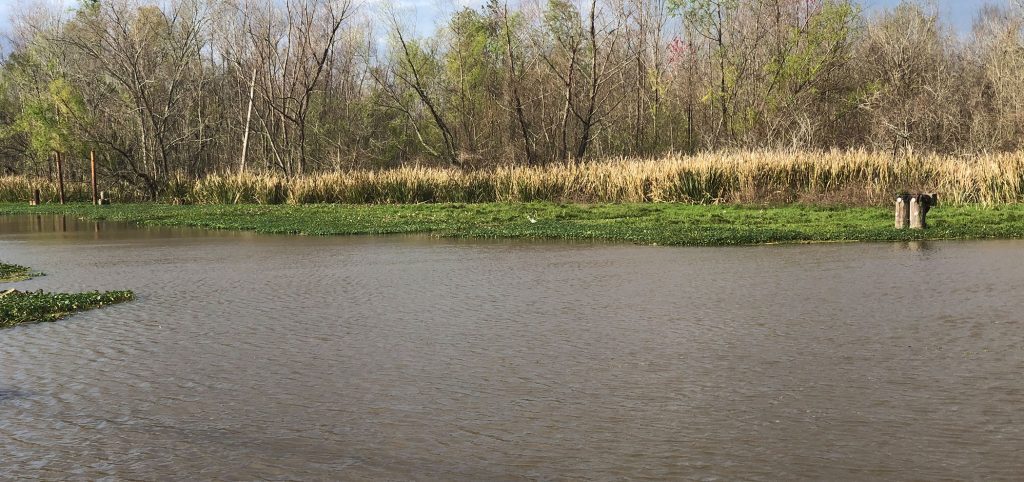
by Lauryn Madere & Shaun Breaux, Managing Editor & Features Editor A community is a group of people living in the same place or having a particular characteristic in common. It’s where people grow up, where they learn who they are. Parents, grandparents, aunts and uncles, cousins, neighbors and even classmates are some of the people who make communities what they are. They are, in simpler terms, home. And in South Louisiana, that sense of community has come from the way the Acadians have historically raised their children, says Paul Leslie, professor of history at Nicholls State University in Thibodaux. “Most of the Acadians that leave here are very successful because they love people,” he says. “They have great people skills, and that’s one of the things that comes out of a community. The community raises the kids.” But communities don’t always last. Sometimes they disappear. Sometimes they are ripped away. All across South Louisiana’s bayou region, people have been forced to leave their homes because of natural disasters or other environmental concerns. In order to preserve the history, culture and traditions of these lost communities, Garde Voir Ci’s spring 2020 issue, will kick off a series capturing the stories of the people that lived in these distinct places in South Louisiana that otherwise would be lost. Places like Grand Bayou, Isle de Jean Charles, Cheniere Caminada, Last Island and the Houma Nation. “That’s the last thing an Acadian wants to do is move,” Leslie says. “You drive along the bayou and you see all these French named lanes and you wonder why? Why because their family originated here.” Only the memories of those left and the documents of those no longer alive sustain Grand Bayou’s story. And Grand Bayou’s stories are the stories of its people. The community it created. And within them, Grand Bayou will always exist. “I want to talk about this because Grand Bayou was so precious to me” says Jason Blanchard, a former resident of Grand Bayou. GRAND BAYOU Echoing the hollowness left behind in Grand Bayou, a set of five, handwritten pages documents the history of the Rousseau family, one of the main families who settled the community. Hazel Aucoin, daughter of Marcelin and Adele Rousseau one of the original families in Grand Bayou, wrote the history that started with Gustave Joseph de LaBarre founding Grand Bayou in 1900 when it was just a sawmill, cotton gin, broom factory, moss gin, country store, dance hall and a barbershop. Located in Assumption Parish, Grand Bayou existed between much larger communities with large Cajun families that lived along both sides of the bayou. “I don’t think Cajun has anything to do with family genetics, it’s more of an environment that you’re raised in,” Leslie says. Aucoin’s notes detail the bayou as the center of the community in the town’s one mile of glory. Its people used the bayou as the main source of transportation, living off the land and attending Sunday afternoon gatherings. Children learned to swim in the bayou during the day, and people would come by horseback or boat to attend big dances every Saturday night. Work mostly took place in the swamp: cutting down trees, pulling logs by pull boats and dredging canals. “It was a friendly community, safe community. We had just everything we really wanted there,” says Jerry Rousseau, who lived in Grand Bayou for 19 years. “We had a store, a schoolhouse.” Just like everything else, the town progressed with time. The country store thrived, restaurants opened, buses ran and natural gas, electricity and parish water developed. Yet the community was in an area that, when rains further north swelled the rivers like the Atchafalaya, the water would back up Grand Bayou and flood the community. Those waters were known as “high water.” And while high water was a concern, the discovery of two other natural resources — salt domes and natural gas — were what eventually drove the people of Grand Bayou from their home. At first, the incorporation of the oil companies created jobs and prosperity. But now, companies like Texas Brine, Dow Chemical and Underground Storage Facility are all that remains of a once thriving community. “When I grew up, it was just a great place to be safe as can be,” Rousseau says. “It’s sickening to pass through it and see what’s happening.” As what little remains disappears, there is a limit to what stories those notes recorded by hand long ago can recreate. But the memories and voices of those who lived in the community still speak — through words, pictures, memories. Garde Voir Ci will tell that story. The story of a community whose only remaining marker, the historical plaque that lies fading on the ground, reminds us of what home really is: “Where we love is home – home that our feet may leave but not our hearts.” —Oliver Wendell Holmes Jr. The Lost Bayou: Series

Global Home // Nicholls International Students

By Leroy Triggs, Staff Writer Many international students come to Nicholls State University representing various parts of the world including Australia, England, Brazil and other countries. Nicholls is the collegiate home of international students from over 30 different countries. Most international students come to play for the athletics programs which also grants them scholarships. Senior soccer player Kristy Helmers says she has come to appreciate the region. “I love everything here,” Helmers says. “The people, soccer, and food are the things I love the most.” Helmers is from Canberra, Australia and came to Nicholls in 2015 to play soccer while studying dietetics. During recruitment, Helmers says she created an instant bond with some of her teammates that she didn’t find while visiting other schools. After four years in the Thibodaux community, Helmers says the local people bring everyone in and make them feel comfortable. “Down south the people are so friendly. It’s like a family, anyone would have a genuine conversation with you. The Nicholls international community also helps you fit in by letting you see that there are other students that go through the same thing you’re going through.” Helmers says the way Americans play soccer involves more aggressiveness on the field. “It wasn’t a massive culture shock, just the food like jambalaya and gumbo, but I love those foods now. The soccer is more physical in the states.” In some cases, international students came into the U.S. before college, as the case is for Brazilian-American Esther Leal. Leal is a sophomore psychology major from Porto Alergre, Brazil. Leal moved to the United States when she was 17 years old, and graduated high school at St. Charles Catholic in Laplace. When it came time for college, Leal says it was another new experience to learn for herself. “After 16 years of one school I had to adjust to a new high school. Two years later, adjusting to college was difficult because after high school I was just getting used to the language. From a living standpoint I had to get adjusted to living with my aunt then living on campus, which isn’t possible in Brazil.” Leal chose to go to Nicholls to keep her family connection strong in the states. In Louisiana, Leal says she has a three-hour time zone difference from her family back in Brazil. “I choose to come to Nicholls because it feels like home. It’s the closest to my aunt even though I miss my grandma’s cooking, I use to eat healthier there. I also miss my little sister who’s three. I feel like I miss out on some events with her. I also miss my friends from there,” Leal says. Leal does not let the distance keep her away from all Brazilian cuisine, even though it is not easy to find. “Coxinha is a great Brazilian food that I can make here. It’s a dough with chicken inside it. It’s difficult to make because the dough has to be made with the chicken broth.” One holiday Brazil and Louisiana share together is Carnival, commonly referred to as Mardi Gras in the Bayou region. “I believe it’s bigger in Brazil because the entire country celebrates it. Even my small city has huge celebrations for the holiday.” Piyush Salekar is a sophomore tennis player from Maharashtra, India. Piyush was a transfer from Mercer University in Macon, Georgia. “I didn’t like the environment at Mercer. The tennis program, coaches, and even professors care about students as individuals,” said Salekar about Nicholls. Salekar’s family is involved in the business world of India, and he grew up with an interest in business. The way the education system operates is also a huge change for Salekar. In India, he says they have one cumulative test at the end of the year. “I was never used to studying every day. I feel like it’s better the way they do it here because it gives you structure and you have to manage your schedule.” The Indian native also found it hard to find food from home country in America, but his favorite is buttered chicken. “The chicken is marinated, smoked with charcoal, and a different type of gravy and ate with bread.” Salekar’s communication with his parents in home country is difficult because India is 11 and a half hours ahead of U.S. Central time zone, which limits his communication with family to twice a day. “It’s tough to communicate with everyone back home, but I make sure I communicate with my parents and close friends.” Even with spending the past year and a half away from his parents, Salekar is no stranger to being away from his parents. In India he played on the international circuit in Asia and Europe for nine months. In that time span he climbed over 1,500 spots and entered the top 350 even though he was suffering a wrist injury while playing. “I’m used to being away from my parents for at most two months at a time, so being away from my family isn’t anything new but knowing I won’t be with them until May is kind of tough.” Salekar says he manages to keep a reminder of home — a small monument of Brahman, the Hindu religion god. “A God is God regardless of region.” An International Student Experience with Kristy Helmers senior dietetics major from Canberra, Australia https://youtu.be/fbkX2m7I4xo International Memories International Service Coordinator Marilyn Gonzalez maintains a collection of trinkets from the international students she works with. Each trinket was mailed to her from a student after graduating from Nicholls State University.

Building a Future // Nicholls 25-Year Plan

Previous Next See Full Nicholls Master Plan By Brandon Cherry, Staff Writer Visualizing goals helps achievement. At Nicholls State University, a 25-year master plan is giving pictures and visuals to what the institution can look like and how it can grow in the Bayou region. Alex Arceneaux, vice president for enrollment and external affairs, says a diagram of this outlook for the university is what encourages donors to give. “It’s important to donors to see images and have a plan in order to receive donations,” Arceneaux says. The school’s campus has received many enhancements in the last few years, and the master plan roadmaps the numerous upgrades it plans to accomplish over the next quarter century. Nicholls State University President Jay Clune, who leads the vision of this project, implemented the plan based on feedback from students, faculty and staff. Clune created a subcommittee in the fall 2018 semester to help form the plan. With so many old buildings and needs on campus, the subcommittee used the survey feedback to show where to start the work. Current and former students found that the least favorite building, by more than 200 votes, was Peltier Hall. Problems like air conditioning inconsistencies, older styled wooden desks and frequent use by underclassman were just some of the problems associated with the building. Starting in the summer of 2019, work began to modernize the restrooms and lighting, as well as fresh paint for the entire building using inmate labor from the Lafourche Parish Jail. Nicholls State alumna Masyn Cortez says she is pleased to see the old building finally getting a new look. “This is a much needed change for Peltier Hall,” Cortez says. “I hated having to use the restrooms in there; they always looked unsanitary.” Another major renovation began during the Fall 2019 semester in the Donald G. Bollinger Memorial Student Union. The entire union was gutted to allow a full remodel. The renovations were completed in time for the university’s homecoming celebrations in late October. Other expected renovations to come are improvements to Ellender Memorial Library, Barker Hall and a new student media office space in Talbot Hall. Funding for these improvements across campus come not only from donors, but also from partnerships with area organizations. “The end goal is to make Nicholls the best place we can make it.” Cost Effective Renovations Partnering with Local Organizations