
AI Challenging to Some Disciplines

lance jones staff At Nicholls State University, the discussion around AI has sparked a range of opinions among faculty members, but some disciplines, like those in liberal arts, are finding it challenging to integrate this emerging technology. “I’m not someone who’s instinctively anti-AI, I think that it’s a really important tool,” says Erick Piller, assistant professor of English and co-director of the writing program at Nicholls. “But as a professor, it’s obvious that it’s not useful for students to simply plug in an assignment prompt into AI and get a paper output.” “It’s obvious that it’s not useful for students to simply plug in an assignment prompt into AI and get a paper output.” Erick Piller, assistant professor of English Disciplines like English, political science, and history at Nicholls State University are grappling with the implications of AI on academic integrity and student engagement. Faculty members, like Piller, express concern that reliance on AI tools may lead to increased academic dishonesty and undermine the critical thinking skills essential to their fields. As educators push to adapt their teaching methods to include AI, they emphasize the need for students to continue traditional practices with their work to continue learning and for personal growth. Piller says the goal of assignments is not simply to produce a final product but to foster student development. “If they’re sidestepping that by using a large language model to write for them, then that obviously defeats the entire purpose of the educational experience,” he says. Dr. Michelle Theriot, interim dean of the College of Liberal Arts and an associate professor of English, says educators noticed an increase in academic dishonesty linked to AI tools. “I have kind of a bad taste in my mouth when it comes to AI,” Theriot says. “I understand that it can be used for a lot of wonderful things; however, I’ve seen it used more for cheating.” Samuel Sprunk, an assistant professor of political science, says as AI continues to evolve, educational institutions must adapt carefully. “AI is a powerful tool, but it should not replace critical thinking and problem-solving skills,” says Sprunk. “We need to focus on developing students, not just training them.” “AI is a powerful tool, but it should not replace critical thinking and problem-solving skills. We need to focus on developing students, not just training them.” Samuel Sprunk, assistant professor of political science The implications of AI misuse extend beyond individual assignments; they pose a challenge to the integrity of educational assessments. Piller says the essence of writing involves critical thinking and personal engagement, which AI-generated content often lacks. “When students use AI to generate ideas, they’re not fully engaging with the work that’s expected of them,” Pillar says. “They’re missing out on a significant part of the writing process.” Educators are also grappling with how to incorporate AI into their teaching style, while also facing a generational shift in how students approach learning. Students often see AI as a means to streamline their work, leading to a passive learning experience. Piller says while AI has its shortcomings, it also presents an opportunity for educators to innovate. “There are incredible tools, but they’re not perfect,” he says. “We need to teach students how to use AI effectively and ethically, understanding both its capabilities and limitations.” As the conversation around AI continues to evolve, Sprunk remains hopeful that educators will find ways to harness its potential. “Ultimately, we want students to leave with skills that make them irreplaceable in the workforce,” says Sprunk. “It is not just about convenience; it’s about growth and development.” But Theriot says it’s not just about students adapting — the challenge lies in adapting traditional teaching methods to a rapidly evolving landscape. “We can’t just keep doing what we’ve always done,” Theriot says. “We have to recognize the fact that students have caught up with this technology and think about new approaches.” the point podcast smart talk
Professor Use of AI Across Departments
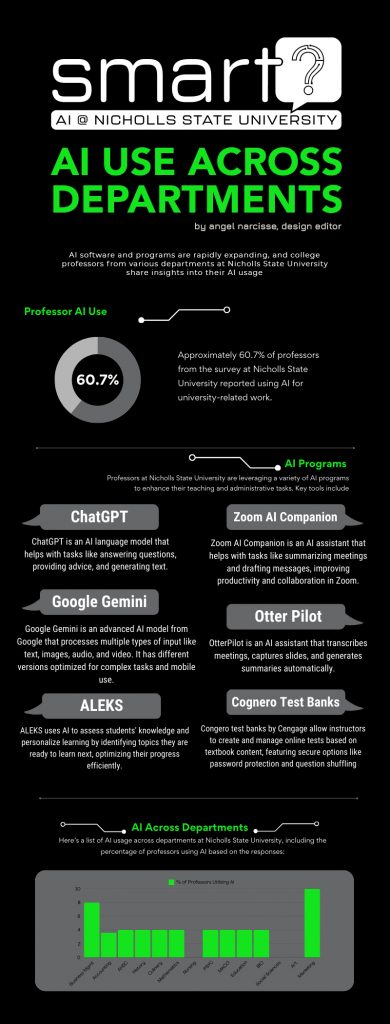
angel narcisse design editor
Nicholls AI Chatbot, Tillou
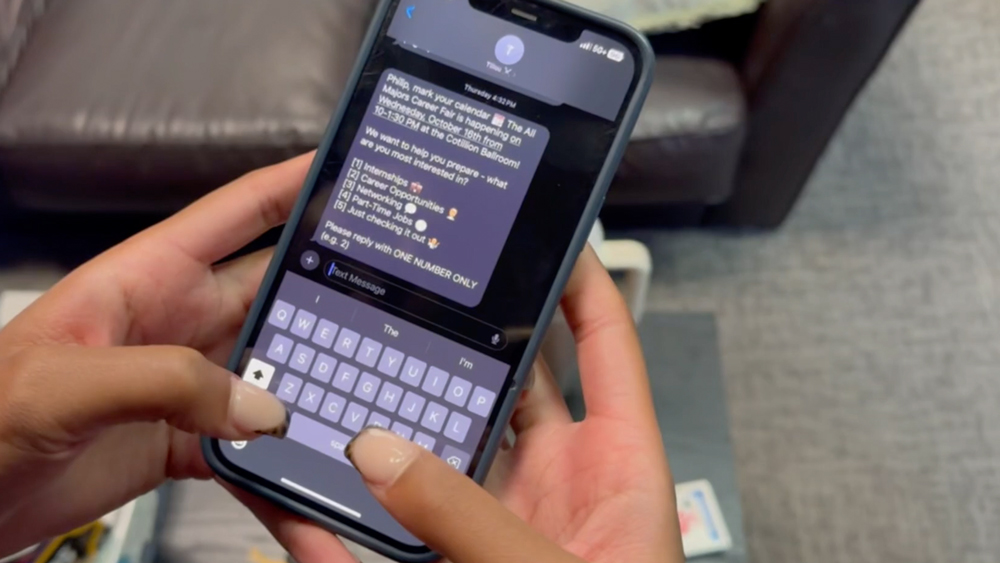
philip landry staff
AI @ Nicholls State University

lance jones staff As artificial intelligence becomes more and more a part of daily life, universities are grappling with how to integrate machine learning without losing academic integrity. “AI, like the Internet, social media, and search engines are all great inventions that benefit societies that can also cause great harm,” says Megan Lowe, library director at Northwestern State University. “If a student can’t analyze a text without a chatbot, what does that say about their education?” “If a student can’t analyze a text without a chatbot, what does that say about their education?” Megan Lowe, library director @ Northwestern State University Student use of AI to help learn and do school work has outpaced faculty use. According to a June 2024 Pearson report, 51 percent of spring 2024 semester college students said AI helped them get better grades and 56 percent said AI helped them be more efficient. Meanwhile, a June 2024 survey of faculty showed that while 66 percent are familiar with AI, only about 14 percent are confident in their ability to use AI in the classroom, according to Ithaka S+R, a higher education consulting firm. In addition, 42 percent of faculty surveyed say they don’t allow students to use AI at all in their courses. As artificial intelligence tools become more advanced and easier to access, students say they are finding new ways to use them for their schoolwork. “When I first heard about AI chatbots, I thought they were overhyped, but now, I can’t imagine school without using these tools for brainstorming or research,” says David Johnson, a former University of New Orleans computer science major. On the other hand, some professors are concerned that the reliance on AI could diminish students’ critical thinking skills. To tackle the challenges posed by AI, many institutions are focusing on developing their faculty’s understanding of these technologies. “Universities should be holding workshops to educate professors and university officials on the basics of AI by viewing technology as a partner in education rather than something to fear,” says Meredith King, assistant director of teaching innovation at the University of New Orleans. “We can improve the overall learning experience.” This approach is used to change the conversation from simply banning AI to exploring its potential, allowing educators to establish clear guidelines while promoting creative ways to use AI, King says. At the same time, many business departments at universities are working to find a middle ground — leveraging AI’s capabilities, while upholding academic integrity. “We’re not advocating for students to let AI take the place of their own ideas, instead we want them to use it to enhance their creative thinking,” says Lowe at Northwestern State University. “As future professionals they will likely collaborate with AI and it’s important that we teach them how to do so in a responsible manner.” the point podcast smart talk The Tillou Chatbot at Nicholls State University uses AI to answers student questions. Dr. Juliann Allen, marketing professor, teaches AI.
The Spiritual Backdrop: Thibodaux Churches
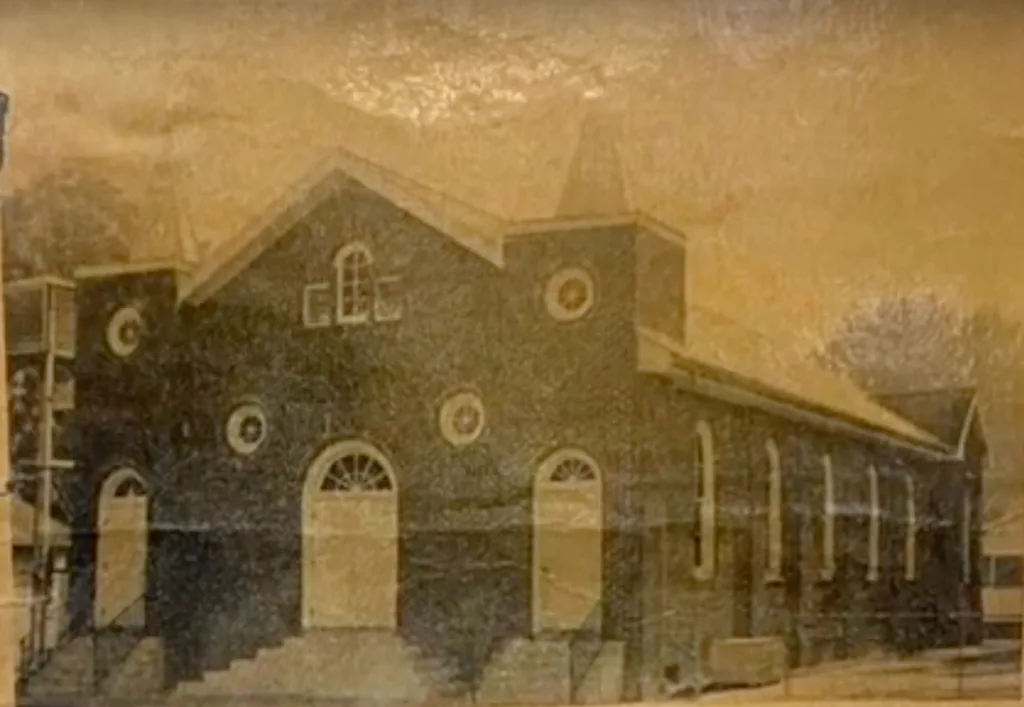
treneice cannon video editor
Circuit’s Soundtrack

gabrielle chaisson staff A song list made up of 10 notable Chitlin’ Circuit artists from the ’50s and ’60s and their highest-rated Billboard R&B hits, which tracked the success of Black artists among Black audiences. Billboard charts have measured radio sales and jukebox successes since the 1940s. The “Race Records” chart highlighted music targeted at black audiences until 1950, when Billboard renamed it Rhythm and Blues, aka R&B. Source: https://exhibitions.lib.umd.edu/fatsdomino/legacy/charts Popular circuit performer Guitar Slim released his hit “The Things That I Used To Do” in 1953. In 1954, it spent 21 weeks on the Billboard R&B charts and 14 weeks at number one on the “Most Played in Juke Boxes” list. Ray Charles, another popular circuit performer, played the piano on this record. Source: https://blues.org/blues_hof_inductee/the-things-that-i-used-to-do-guitar-slim-specialty-1953/ Following the success of Tutti Frutti in 1955, Little Richard released “Long Tall Sally” the following year. This record peaked at number one on the “Billboard Rhythm and Blues Best Sellers” chart. This song became Little Richard’s first number-one R&B hit. Source: https://www.pbs.org/wnet/americanmasters/little-richard-biography-and-career-timeline/27612/ Source: https://www.billboard.com/music/rock/little-richards-best-moments-songs-movies-9374735/ Fats Domino’s 1956 version of “Blueberry Hill” dominated the R&B charts for 11 weeks and held the number two spot on the pop charts for three weeks, making it a hit with both black and white audiences. Source: https://www.loc.gov/static/programs/national-recording-preservation-board/documents/Blueberry-Hill_DeWitt.pdf Source: https://www.rollingstone.com/music/music-lists/fats-domino-12-essential-songs-116967/aint-that-a-shame-1955-117550/ Ike and Tina Turner’s 1960 Billboard hit “A Fool In Love” held the number two spot on the “Hot R&B Sides” chart and peaked at number 27 on the “Hot 100” chart. It served as the duo’s first Billboard charting single. Source: https://www.billboard.com/music/music-news/tina-turner-hot-100-hits-favorite-song-poll-1235340447/ Sam Cooke released his Billboard hit “Bring It On Home To Me” in 1962. It spent 18 weeks on the Billboard R&B chart and peaked at number two. He received a Grammy nomination for “Best Rhythm and Blues Recording” with this record. Source: https://www.billboard.com/artist/sam-cooke/ Source: https://www.billboard.com/music/awards/grammys-2022-sam-cookes-music-nominated-1235010070/ Ray Charles’ 1962 hit “I Can’t Stop Loving You” spent 16 weeks on the Billboard R&B charts. It peaked at number one and held that spot for 10 weeks. Charles released this song as part of his country album, Modern Sounds in Country and Western Music. Source: https://www.billboard.com/artist/ray-charles/chart-history/hsi/ Source: https://education.nationalgeographic.org/resource/ray-charles-tops-charts/ Slim Harpo released his hit “Baby Scratch My Back” in 1966. It peaked at number one on the Billboard R&B chart for two weeks and stayed on the chart for 18 weeks. His music’s impact expanded beyond blues into rock n’ roll with remakes of The Rolling Stones and Grateful Dead. Source: https://www.billboard.com/artist/slim-harpo/ Source: https://westbatonrougemuseum.org/277/James-Slim-Harpo-Moore Aretha Franklin’s 1967 reimagining of Otis Redding’s song “Respect” stayed on Billboard’s R&B charts for 15 weeks and spent eight of those weeks at number one. It became an anthem for women’s empowerment and appealed to black and white audiences during the Civil Rights Movement. Source: https://www.billboard.com/artist/aretha-franklin/chart-history/bsi/ Source: https://www.biography.com/musicians/aretha-franklin-respect-meaning James Brown released his hit “Cold Sweat” in 1967. It peaked at number one on Billboard’s R&B charts and held the spot for three weeks. Credited with creating a new genre of music, Brown blended soul with funk. Source: https://www.theguardian.com/music/musicblog/2015/oct/28/james-brown-10-of-the-best Otis Redding’s 1968 (Sittin’ On) The Dock of the Bay posthumous album remained on the Billboard R&B charts for 37 weeks and held the number one spot for three weeks. His song of the same title became the “first posthumous number-one record in chart history.” Source: https://www.billboard.com/artist/otis-redding/chart-history/blp/ Source: https://americansongwriter.com/the-dock-of-the-bay-otis-redding-behind-the-song/
Recreating the Circuit: The Sugar Bowl

jaci remondet staff
The Lost Bayou: Chitlin Circuit – new
sarah kraemer features editor The 1930s to the 1960s were the height of blues, jazz, R&B and rock ‘n’ roll music. It was also the height of Jim Crow segregation in the South. In a time when Black musicians could not perform at popular, career-making venues, these musicians had to find unique ways to play for audiences. Because of this, performers and venue owners created an “underground” network of live entertainment locations now called the Chitlin’ Circuit. Small venues on the circuit were located everywhere from Texas to Florida to Massachusetts to the small Louisiana town of Thibodaux. Thibodaux “was like a base on a baseball field” for black musicians, says Jeff Hannusch, author of “The Soul of New Orleans: A Legacy of Rhythm and Blues.” Thibodaux was home to various stops on the Chitlin’ Circuit, like the Sugar Bowl, that were kickoffs for musicians’ careers — impacting the musicians, the residents, and the culture of the area itself. “The music was unpolished, but that’s what made it so good. It was the real thing. It was reality.” Jeff Hannusch https://youtu.be/2TVGVIyw1F0 Thibodaux is in the heart of Bayou Lafourche, that area south of New Orleans that most of the U.S. believes sits in the water. This Cajun town has a community that fosters a unique music culture. These characteristics made Thibodaux a prime area for African American musicians to perform during Jim Crow segregation, especially with the financial help and moral support of the Sugar Bowl Owner Hosea Hill, Hannusch says. After The Great Depression, the Great Migration of Black Americans from the South to the North corresponded with a migration of rural black Americans to cities like New Orleans. “Between 1920 and 1940, the New Orleans black population swelled from 100,000 to 150,000,” according to “A Closer Walk,” a non-profit website focusing on New Orleans’ music history. Among those migrating to the Crescent City were young people from small towns, like Thibodaux, who would become some of the most influential blues and R&B artists of the time. This migration led to venues owned, run, and visited by Black Americans in these cities and their rural feeder towns. Hannusch, a New Orleans resident, says people would get dressed up to “raise hell” and listen to these musicians. “The music was unpolished, but that’s what made it so good,” Hannusch says. “It was the real thing. It was reality.” This music and these venues became a part of the Black culture of the time, especially in an era before entertainment media like TV and the Internet. 93-year-old Mary Anne Hoffman says she remembers her friends attending circuit performances. “At the time, it wasn’t proper [for white people] to go into those places, but a lot of my friends went and participated in that,” says the Thibodaux native. Those stepping over the segregation lines could face serious consequences. “You would have to take a chance,” Hannusch says. “A lot of those guys ended up in jail for the night.” Because of the fear of crossing segregation lines the circuit had an air of secrecy and the stories of the musicians and their impact have also stayed hidden. The Circuit with Dr. Jason Ladd | Today Thus, today the essence of the Chitlin’ Circuit is mostly lost and unspoken. Hannusch says that’s why he began his research. “It was ignored by a lot of people at the time…and now,” he says. This, along with the normal passage of time, means those who experienced the Chitlin’ Circuit firsthand are gradually taking those memories to their graves. “I had several friends that I know would know so much, but… they’re either dead, or I can’t reach them,” Hoffman says. The music and the memories of the circuit’s culture can be told, however. Like a vinyl record created by musicians with accuracy and care, the story of the Chitlin’ Circuit can be recorded by those who experienced the music and by those impacted by the culture of the musicians who created it. This issue of Garde Voir Ci will do just that. “It was ignored by a lot of people at the time…and now.” Jeff Hannusch Hosea Hill’s Sugar Bowl in Thibodaux Invitation to the Sugar Bowl Tina Turner performing in Thibodaux Eddie Jones, Thurston Hill, and Hosea Hill
By the Decade
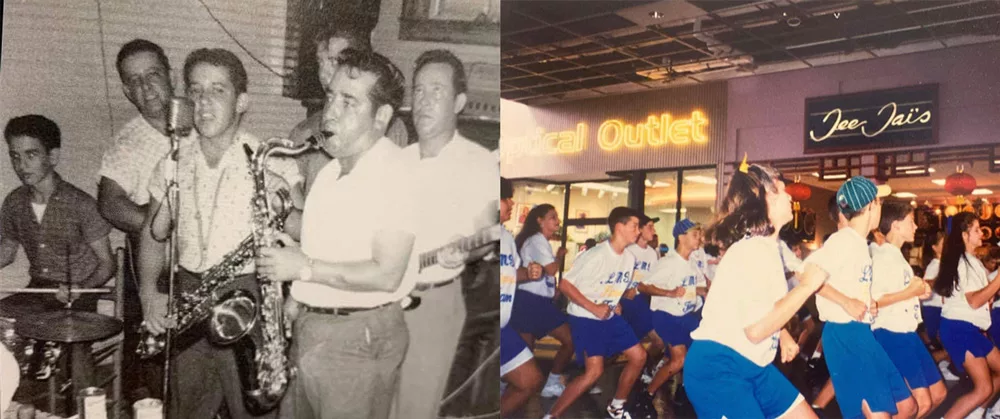
For the more than 900,000 teenagers and young adults in South Louisiana’s Bayou Region, much of the thriving youth culture scene of past decades has disappeared. Bars, clubs, entertainment, and hangouts are now few and far between. “My friends and I would always go to the skating rink for lock-ins to have a good time; but now it has been converted into some apartment buildings and a church,” says Rebecca Davis, who grew up in Morgan City in the ’80s. “There isn’t much now for our grandchildren to do.” 50s-60s Top Hangouts 70s-80s Popular Youth Culture Places Youth Culture Places Today Popular Youth Hangouts
South Terrebonne High School
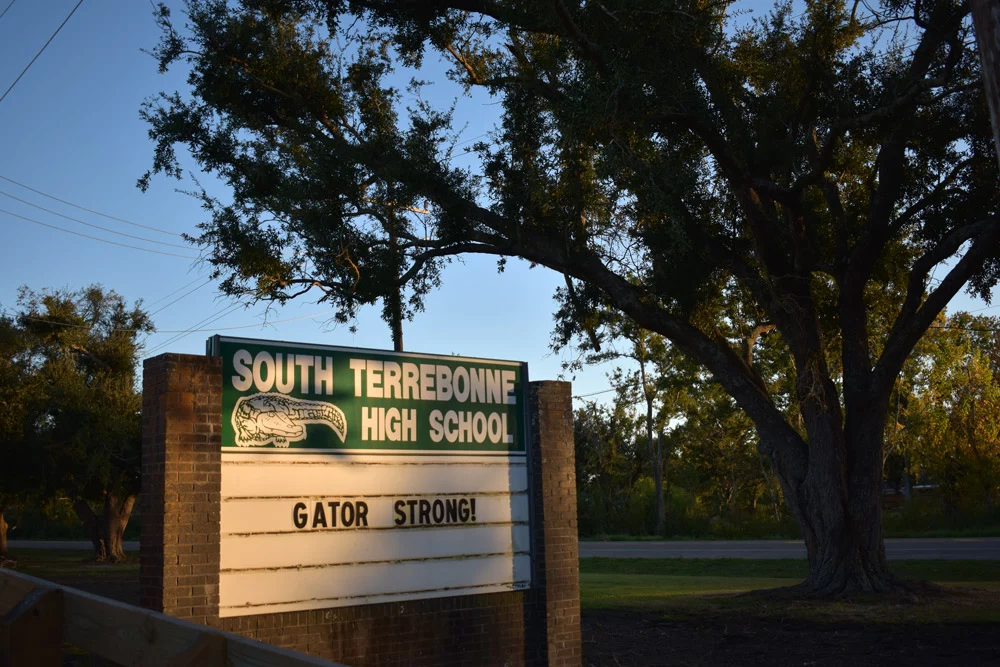
By hannah robert, guest contributor A school campus with the lights on but empty. The school doors barricaded, still keeping students out. The school cafeteria not holding food but instead debris. The school parking lot with no cars parked but instead dumpsters. The building is closed, and yet, school continues. South Terrebonne High School is a school in lower Terrebonne Parish that was devastated when Hurricane Ida hit on Aug. 26, 2021. Since then, the students have not set foot within the main school buildings. They platooned at H.L. Bourgeois High School last year and now attend classes in trailers, and yet they are an A school and have successful sports and band programs this year. Through it all, they have maintained their culture through sharing in community, giving without expecting anything in return and having hope. When the hurricane hit, it changed the South Terrebonne area for good. Katy Ledet, activities coordinator at the school, says that everyone talks about time in terms of “before and after Ida” because that was when time and reality changed. South Terrebonne had 970 students before the hurricane, but after it hit, the numbers went down to 826. The students were out of school until Sept. 28 and off their campus for one year. When they went to school at H.L Bourgeois, students attended their classes from 12:30 p.m. to 5:30 p.m. Students would often not get home until 7:30 p.m. or later because of traffic and problems staffing buses. The problems with platooning didn’t end there. There were also deeper problems of being away from home. Hayden Robichaux, student council and cheer sponsor, says “It was a traumatic experience for all of us. It felt like we were in survival mode. We were able to have class thanks to HLB, but we kept our heads down and didn’t realize how big what we were going through was until it was over.” Ledet says that it was all about being in a blue school. They had prom in H.L. Bourgeois’ gym with their mascot, the Brave, looking down at them. She says that everywhere she looked it was their colors and she just wanted to be back in a green school. “Not being surrounded by our colors, traditions, mascot, community and culture was so jarring. We were so far removed from our community and our green school. We needed to be back on the bayou” Ledet says They had to pause their traditions because they only had 35-minute classes and one football field for all of the parish’s schools to use. St. Ann Catholic Church in Bourg helped South Terrebonne during that year by giving them a place to hold events. The church gave them a key to their community center with no strings attached. They didn’t have to pay for expenses or book days to use the building. It was open to them. The South Terrebonne baseball team’s journey to the playoffs gave the community hope for the first time after the hurricane. No one expected the team to do anything because of the struggles they had to deal with, but they did it anyway. Ledet was live streaming the semi-final game for dozens of students at H.L. Bourgeois during recess. As she watched the team make the play to win their spot in the finals, Ledet broke down. She cried, hugged, laughed and cheered for the Gators. “It was the first time in this very blue school that we had such a perfect, green memory,” she says. The players played for their community and dedicated the school’s first state championship win to them. The team gave hope to the community for the first time since Hurricane Ida hit. “For a moment, nobody was worried about how far away school was. Nobody was worried about insurance,” Ledet says. “Nobody was worried about the tarp on their roof. Everybody was just watching baseball.” The community’s mindset shifted from focusing on the rebuilding to celebrating with the Gators. The community honored that throughout this year by making them captains of the Hercules parade and throwing banquets. The South Terrebonne baseball field is being repaired in time for the baseball season in the spring, so the Gators can play at home. This school and its community has helped each other, asking for nothing in return. The students have given the community something to celebrate and hope for during the long process of piecing their lives back together. The community has donated money, equipment and buildings to use to the school. “That is the essence of not only being Cajun but being a Gator,” Robichaux says. “It’s like when we were gutting my mom’s house after the storm. My neighbors came over and helped out just because, and while they were there, we fixed them dinner.” On Aug. 4 2022, the building of the trailer classrooms was finished and teachers got access to the buildings. The next day was their scheduled open house. Open house at South Terrebonne is normally a scheduled event with parents moving from classroom to classroom on a bell schedule to meet teachers. Because there was no time to prepare, the school hosted a different kind of open house. They unlocked the doors of the new campus and just let people walk around and take it in. Robichaux says that it turned into a “Where are you now?” talk. Everyone could finally see what progress has been made on the school, so they talked about what progress everyone had made at home. Who was back in their houses, who was still living in campers, who still had nothing and how everyone felt. Robichaux says that everyone breathed a sigh of relief that they were finally back home at South Terrebonne. They didn’t have to drive their kids across Houma every day for school. School would finally take place back on South Terrebonne’s campus. Just because they were back on campus didn’t mean all of their problems were solved. The teachers had