The Sugar Bowl

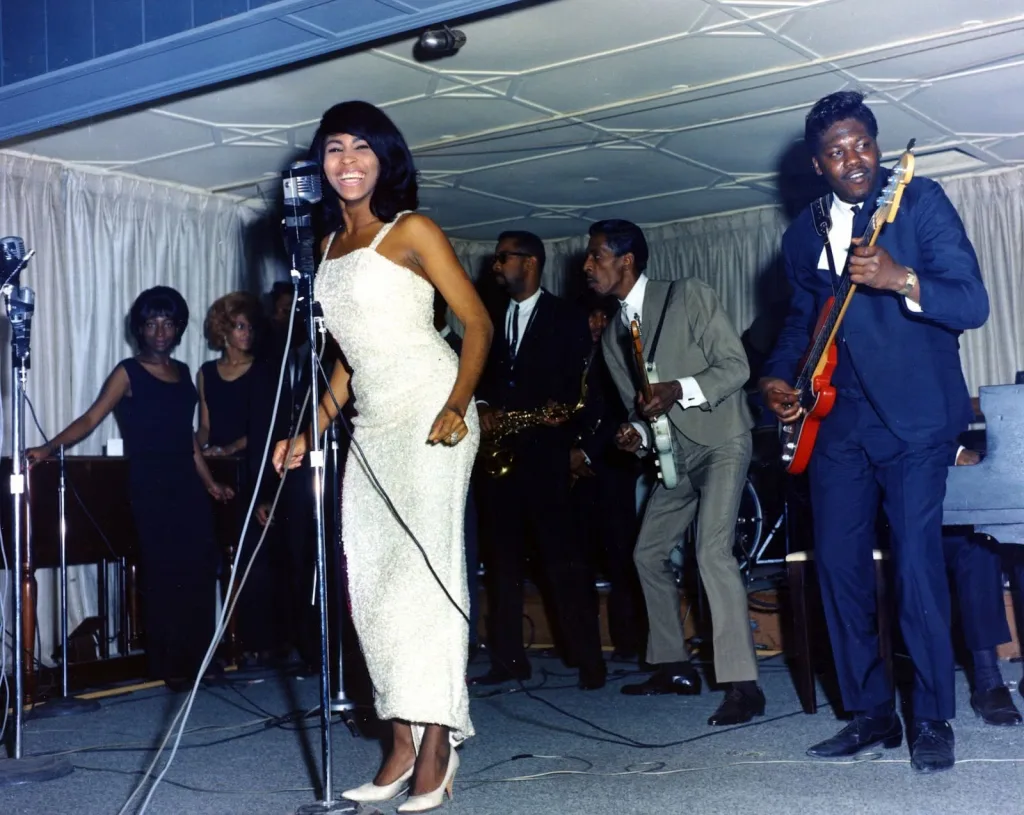
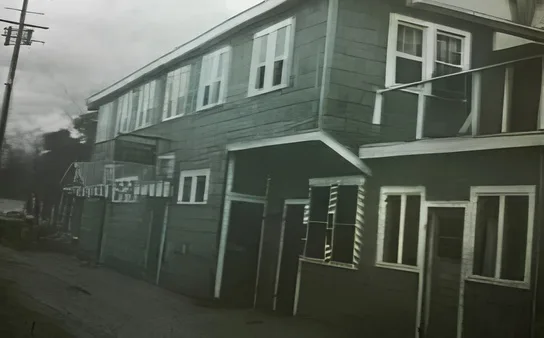
sarah kraemer features editor Every Saturday night, the Sugar Bowl’s walls reverberated with the sound of the blues and R&B. The club was a safe space where the community would gather for entertainment and support when needed. The club was known for its Cajun food and live music. It was one of the most popular hotspots in Louisiana on the Chitlin’ Circuit. “It was part of Black culture. Saturday night they went out to listen to music, and in Thibodaux, it was the Sugar Bowl.” Jeff Hannusch Hanusch is a family friend of the venue’s owner, Hosea Hill, and his family. The Sugar Bowl started around 1932 as a bar in a rented building on Narrow Street. Thibodaux native Hill owned the bar, hoping to target people from his mother’s nearby cafe. Hannusch says the venue’s name came from its patrons, such as cane workers from the sugar mill about 10 minutes down the road called Lafourche Sugars. The sugar industry, which started over 200 years ago, is still bustling today. Lafourche Sugars produced 231 pounds of sugar in 2018, according to the American Sugarcane League. About 20 years later, Hill moved the Sugar Bowl to a larger, more permanent location at 915 Lagarde Street. The bigger venue included a dance hall “that could hold more people and attract larger artists,” says Hannusch. Tina Turner, “the Queen of Rock n’ Roll,” and Guitar Slim, a guitarist known for hits like “The Things I Used To Do,” are some of the many artists that played at the venue. Guitar Slim, a guitarist from Mississippi, would play with the bands as a house musician, says Hannusch. House musicians would sit in with bands who were missing musicians during their time at the venue. They performed R&B, Blues and Rock n’ Roll music at the Sugar Bowl as they couldn’t play in mainstream white venues because of the segregation laws. “The cops would always hassle them. Hill would have to pay the cops off at times.” Hannusch says. “There used to be a problem back in the day when white people went to black clubs [and vice versa].” But that did not stop white people from coming to the Sugar Bowl. Hannusch says during segregation there were risks of getting arrested. But, he says Hill would let those white people in so long as they paid their admission fee. The payment and risk factors were the least of Hill’s concerns because he focused more on creating a positive space for musicians and the community. “He helped a lot of musicians out,” says Hannusch. “He bailed a lot of bands out that got stranded. He put them out for free until they could get on their feet.” Hill helped the community through the Sugar Bowl, too, according to his niece. “Resources were very limited on the Chitlin Circuit,” says Hill’s niece Angela Watkins. “Fortunately for us, Uncle Hosea was the guy at the right place and the right time to be able to help people furthering their careers, help with raising children, and help with feeding the community.” The venue burned down around 1969, but the community helped him to build the club back in close to 30 days, says Hill’s grandson Harvey Hill. “The community really supported the club,” he says. “The fire marshall, police chief and people of the community helped to build it back.” Hosea died in 1973 from cancer, and the club closed shortly after. “There’s no Chitlin’ Circuit [or Sugar Bowl] anymore, but if [people] listen to the music of the era [they can] get an appreciation for what it was like.” Jeff Hannusch Sugar Bowl in the 1930’s Hosea Hill’s Sugar Bowl Newspaper about Sugar Bowl Hosea Hill, Thurston, Harvey SR Sugar Bowl Location Today Sugar Bowl Location Today 915 Lagarde St. Closeup Front of 915 Lagarde St.
An Overlooked Artifact: Moses, Allen Chapel, Calvary Cemeteries
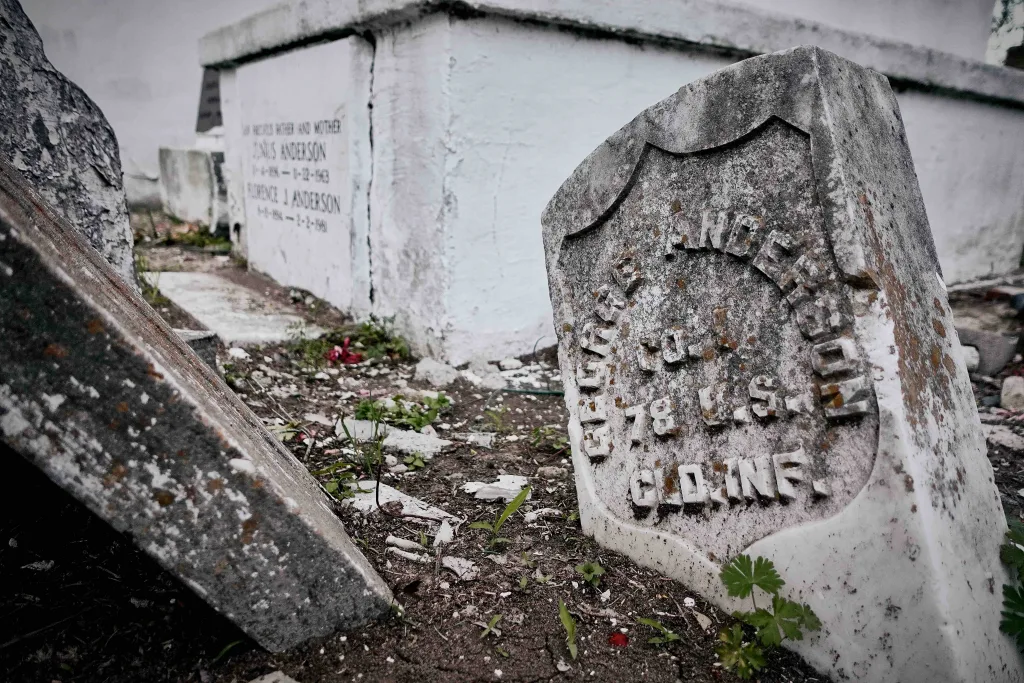
gabrielle chaissson staff Hidden among Thibodaux, Louisiana’s side streets lies a cemetery with a deep connection to the Chitlin’ Circuit. Hosea Hill and Eddie “Guitar Slim” Jones, two significant circuit figures, are buried in Moses, Allen Chapel, Calvary Cemeteries. Hill owned the Sugar Bowl—a venue that brought the circuit down to Thibodaux—and he managed “Guitar Slim,” a popular circuit performer known for his unique performance style and outlandish entertainment tactics. Hill’s grave sits next to Guitar Slim’s and faces the site of the Sugar Bowl, which was intentional, according to his niece Angela Watkins. “Burying him closest to what he became. What he was known for…That’s a nice ending.” Angela Watkins Since its establishment in 1880, Moses, Allen Chapel, Calvary Cemeteries has served as an exclusively African American cemetery for three of Thibodaux’s churches — Moses Baptist Church, Allen Chapel AME Church and Calvary United Methodist Church. It is considered one of the earliest local burial grounds for African Americans, according to its historical marker. “African Americans needed a place to bury their loved ones when they passed on, so the churches got together and purchased property to do that,” says Patrick Bell, the pastor of Allen Chapel AME Church. “It was a way for families to say goodbye to their loved ones.” Bell says all three churches share the land and each is responsible for its section of the cemetery. The Louisiana Cemetery Board divides the site into Moses Baptist Church Cemetery, Allen Chapel AME Cemetery and the Calvary United Methodist Church Cemetery. Divided along the three streets that surround the cemetery, the Moses Cemetery is listed on McCulla Street, Allen Chapel Cemetery is on 12th Street and Calvary Cemetery is on Goode Street, according to the board’s database. The cemetery was unnamed until 1999 when the Lafourche Heritage Society’s board members commissioned a historical marker and combined the names of all three churches, according to the Lafourche Heritage Society Historian and Nicholls State University Archivist Clifton Theriot. Although the cemetery is shared between the three churches, most of the people buried there were not affiliated with one specific church, according to cemetery documents. The headstones are arranged in haphazard rows throughout the cemetery and are both engraved and hand-painted, representing the site’s 144 years of history, ancestry and legacy. Some of the oldest headstones commemorating the burial sites are of two African American Union soldiers, George Anderson and Alexander Miller — soldiers born and raised in South Louisiana, yet fought for the Union and their freedom. Anderson was a private in Union Company I within the 78th Regiment of the United States Colored Infantry and Miller was a private in Union Company K within the 75th Regiment of the United States Colored Infantry. There are also World War I, Korean War and World War II soldiers buried here. Along with its circuit and military connections, this cemetery has a strong connection to local community leaders. Leaders like Cordelia M. Washington, who was a pioneer of African American education, and Pastor Jacob Young, who helped establish Allen Chapel AME Church in Thibodaux in 1895, are buried here along with many others. And while the cemetery is the final home for many important figures, there are few records about it. Local entities like the Louisiana Cemetery Board, the Louisiana Office of Cultural Development and the Lafourche Heritage Society do not have a lot of historical documentation on this cemetery. “Black history wasn’t recorded like white history was recorded…The younger generations just aren’t interested in it anymore. On one hand, I applaud them. Move forward. On the other hand, you cannot forget the history. This is how you became you.” Angela Watkins Allen Chapel Marker Mr. George Anderson’s fallen headstone behind old headstones Calvary Church Front Entrance Calvary Church Marker Current photo of Allen Chapel Guitar Slim and Hosea Hill George Anderson’s headstone Guitar Slim’s headstone Guitar Slim, Hosea Hill, and Thurston’s graves with cemetery marker Hosea Hill’s headstone Moses Allen Chapel News clipping from 1899 when Rev. TJ Rhodes passed Rev. Thomas J Rhodes headstone
Getting on the Chitlin’ Circuit

skylar neal staff Musicians like Tina Turner, Jimi Hendrix, Aretha Franklin, Ella Fitsgerald and Sam Cooke made their debut on the Chitlin’ Circuit. “You really had to play, ‘cause those people were really hard to please… That’s where I learned to play, really, in Nashville [on the Chitlin Circuit],” Hendrix says in a 1967 interview with the Los Angeles Free Press. Performers joined the circuit in three ways: word of mouth between managers, connections with circuit venue managers or using booking companies to book the performers into the circuit. Local historian Denis Gaubert says Black venue owners would go to each other’s venues and scout for good performers. He says performers would directly contact owners to say, “Look, if you’re looking for some talent or something like that, we can come play – this is what we’ve got.” Denis Gaubert Booking companies would book performers if Circuit venue managers did not. There were two major booking companies within Chitlin’ Circuit history: The Theatre Owners Booking Association, which started in 1920, and The Ferguson Brothers Booking Agency, which started in 1940 when the Theatre Owners Booking Association disintegrated after the Great Depression. The entertainers heard about the circuit through word of mouth and saw advertisements around town in the form of posters, papers and news clippings. “Everything was posters if they could afford posters,” says Angela Watkins, the niece of one of Thibodaux’s biggest circuit managers, Hosea Hill. “Otherwise, it was just scribbling on a piece of paper tacked to the front door saying ‘appearing tonight’ and so forth.” The venue size and the musician’s fame determined the payment amount for a performer. The performers were paid a portion of the venue’s cover charge profits for the entire night. Sometimes, the venues did not have enough money to pay their performers, so they paid them with food. Without the Chitlin’ Circuit, these artists would not be as big as they are today. “Those people were not famous at [the start of the Chitlin’ Circuit]. The Chitlin’ Circuit helped bring up a lot of first-class acts that went on to become famous,” Watkins says. “These were struggling entertainers trying to perfect their talents.” Getting on the Circuit Hearing About The Circuit Word of mouth Posters, papers and newspaper clippings The Booking Talk between managers of the Chitlin’ Circuit venues Booking companies The Pay A portion of the venue’s cover charge profits Sometimes the venues did not have enough money, so they paid them with food
How the Circuit Got Its Name

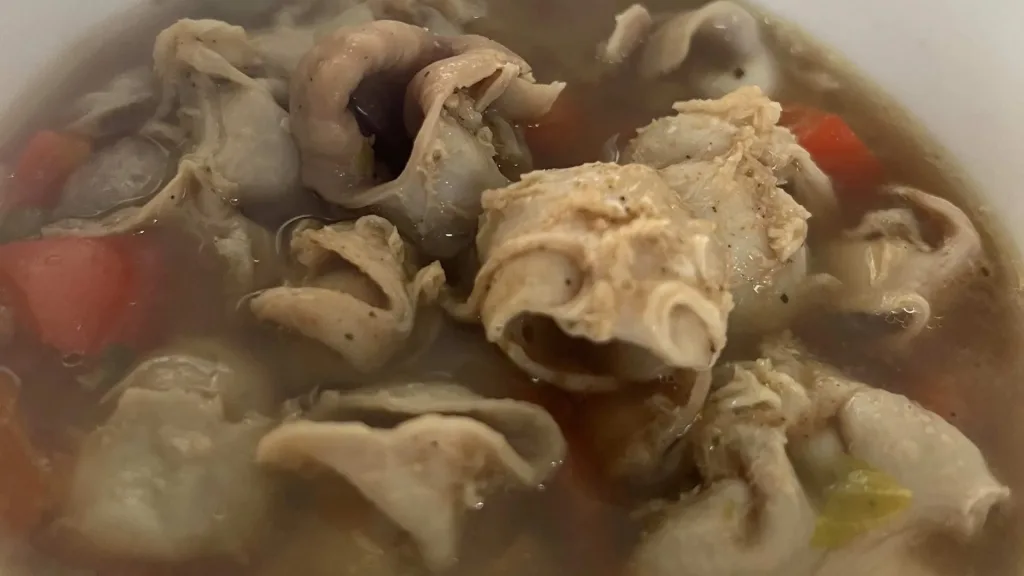
jaci remondet staff A distinct smell travels through the air as water starts to boil over the hot stove fire. The oil hisses as the holy trinity — onion, green bell pepper and celery — sauté together. Chitterlings are on the menu for dinner tonight. Chitterlings, sometimes spelled chitlins or chittlins, can be prepared in a variety of ways, including stewed or deep-fried. Chitlins mostly come from hogs but can also come from other domestic animals such as cows, chickens or lambs, according to Oscar J. Jordan III in the Soul-Patrol Times. This dish is traditionally known as an African American soul food and dates back to slavery. The Chitlin’ Circuit name comes from an ode to the traditional dish in the Black community, says Gregory Rosary, an instructor in the Chef John Folse Culinary Institute at Nicholls State University. “Down South, little hole-in-the-wall juke joints would always have chitlins or pig feet, you know, soul food. Somebody just called it the Chitlin’ Circuit because chitlins were huge back then, and it was just a nickname they came up with.” Gregory Rosary Clubs compensated Black performers with food, such as chitlins, after a show. Chef Rosary says the venues would often serve the dish as well. The performers would then sell the food to earn money. Thibodaux native and former Lafourche Parish Councilman Jerry Jones says local stories passed on through generations gave the circuit its name. “What was told to me, the Chitlin’ Circuit, came from Black people eating chitlins,” Jones says. “Since it was a place for just Black people, and they had loved the special dish.” Henry Louis Gates says in his 1997 The New Yorker piece, “[Chitlins] its a good example of how something that was originally eaten out of necessity became, as is the way acquired taste, a thing actively enjoyed.” L&N Food Store Frozen Chitlin at L&N Food Store Cleaning Chitlins Cooking prep and spices Chitlins cooking in a pot Bowl of chitlins Stewed Chitlins Ingredients Chitlins Apple Cider Vinegar Baking Soda Garlic Onion Celery Red Bell Pepper Green Bell Pepper Chicken Broth Onion Powder Garlic Powder Salt Pepper Tony Chachere’s Seasoning Red Pepper Flakes Optional Rice 1 Clean the chitlins thoroughly and separate the membrane from the lining Tip: Use apple cider vinegar and baking soda to help with the smell and to clean further 2 Boil chitlins in a large pot to get rid of impurities Drain 3 Cook down all the vegetables in a clean pot and add the chitlins back in 4 Add in chicken broth and seasonings 5 Cook for about three hours on a low simmer 6 Optional: serve over rice
Chitlin’ Circuit’s Start in the Bayou Region
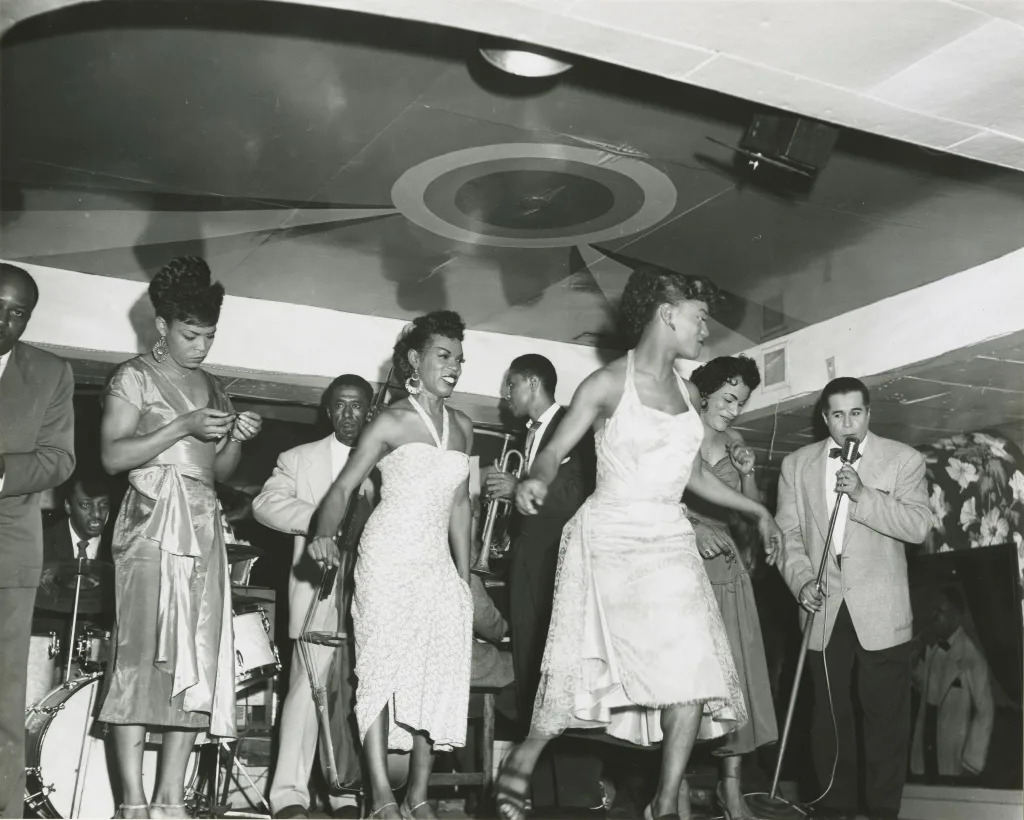
sally-anne torres staff In the mid-1900s, music could be heard throughout the Bayou Region of South Louisiana when the sun set. Playing through the night, blues, rock, jazz and soul harmonized with the late-night laughter of African American artists who established venues for performers since they were not allowed in white spaces. Frank Painai owned a barbershop-turned-hotel on LaSalle Street in New Orleans, where musicians like Aretha Franklin, Marvin Gaye, and Irma Thomas played inside. During the 1930s, Painai decided to expand and build a bar and hotel inside the shop. The inn was more than just a place to watch performers and sleep. The inn acted as an incubator for the start of Rock ‘n’ Roll, according to the Dew Drop’s website. Artists would often travel through the night to the next venue, trying to stay out of the police’s eye. “It’s almost like another form of the Underground Railroad. They had ways to move around to evade running into the law. Many times they [Black musicians] were targeted.” Margie Scoby, founder of the Finding our Roots African American History Museum in Houma Painai and Hosea Hill, an entrepreneur from Thibodaux, made good friends and even better business partners. When the musicians finished at the inn, Hill would take artists from there and bring them an hour southwest to the Sugar Bowl in Thibodaux, also known as Hosea’s Place, says Angela Watkins, Hill’s niece. Watkins recalls the Sugar Bowl as being the most popular club in Thibodaux. “There was always entertainment at Uncle Hosea’s Place. His place was the most popular,” says Watkins, “When they [musicians] came through the Dew Drop Inn in New Orleans, the next stop was the Sugar Bowl.” The business owner and entrepreneur also hired the Hosea Hill Serenaders, the Sugar Bowl’s house band, to play during the week when no big acts were in town. When big names performed, like Tina Turner, Guitar Slim and Fats Domino, teens could be found spread around the club’s perimeter, hoping to catch a glimpse of the show. “When artists would come close to Thibodaux, like New Orleans, Hill arranged for them to pass through Thibodaux as well,” says Patrick Bell, pastor at Allen Chapel AME in Thibodaux. Hosea would book out Stark Field, then a baseball field and now the police station on Canal Boulevard in Thibodaux, for bigger shows like Lloyd Price or James Brown. Gigs like these were Thibodaux’s first integrated events. “He could put on concerts at Stark Field, rent it, and fill it,” says Denis Gaubert, a local historian and former lawyer in Thibodaux. Odd Fellows Hall, the Rose Club and the Hawaiian Lounge could be found 15 miles down the bayou in Houma. “It [Odd Fellows Hall and the Hawaiian Lounge] was a stomping ground,” says Scoby. Scoby says the venues along the circuit served as a safe space for the African American community to gather and have fun. Bell says, “It [Chitlin’ Circuit] was the inspiration for a lot of people from Thibodaux that got into the performing arts business, particularly music.” Bayou Lafourche Dark Bayou Lafourche Dew Drop Audience Dew Drop Cafe Dew Drop Cafe Flyer Dew Drop Inn Today Safari Room Nola Tony’s Cafe, New Orleans, Louisiana Tina Turner performing at Dew Drop Cafe
The Lost Bayou: Chitlin Circuit
sarah kraemer features editor The 1930s to the 1960s were the height of blues, jazz, R&B and rock ‘n’ roll music. It was also the height of Jim Crow segregation in the South. In a time when Black musicians could not perform at popular, career-making venues, these musicians had to find unique ways to play for audiences. Because of this, performers and venue owners created an “underground” network of live entertainment locations now called the Chitlin’ Circuit. Small venues on the circuit were located everywhere from Texas to Florida to Massachusetts to the small Louisiana town of Thibodaux. Thibodaux “was like a base on a baseball field” for black musicians, says Jeff Hannusch, author of “The Soul of New Orleans: A Legacy of Rhythm and Blues.” Thibodaux was home to various stops on the Chitlin’ Circuit, like the Sugar Bowl, that were kickoffs for musicians’ careers — impacting the musicians, the residents, and the culture of the area itself. “The music was unpolished, but that’s what made it so good. It was the real thing. It was reality.” Jeff Hannusch Thibodaux is in the heart of Bayou Lafourche, that area south of New Orleans that most of the U.S. believes sits in the water. This Cajun town has a community that fosters a unique music culture. These characteristics made Thibodaux a prime area for African American musicians to perform during Jim Crow segregation, especially with the financial help and moral support of the Sugar Bowl Owner Hosea Hill, Hannusch says. After The Great Depression, the Great Migration of Black Americans from the South to the North corresponded with a migration of rural black Americans to cities like New Orleans. “Between 1920 and 1940, the New Orleans black population swelled from 100,000 to 150,000,” according to “A Closer Walk,” a non-profit website focusing on New Orleans’ music history. Among those migrating to the Crescent City were young people from small towns, like Thibodaux, who would become some of the most influential blues and R&B artists of the time. This migration led to venues owned, run, and visited by Black Americans in these cities and their rural feeder towns. Hannusch, a New Orleans resident, says people would get dressed up to “raise hell” and listen to these musicians. “The music was unpolished, but that’s what made it so good,” Hannusch says. “It was the real thing. It was reality.” This music and these venues became a part of the Black culture of the time, especially in an era before entertainment media like TV and the Internet. 93-year-old Mary Anne Hoffman says she remembers her friends attending circuit performances. “At the time, it wasn’t proper [for white people] to go into those places, but a lot of my friends went and participated in that,” says the Thibodaux native. Those stepping over the segregation lines could face serious consequences. “You would have to take a chance,” Hannusch says. “A lot of those guys ended up in jail for the night.” Because of the fear of crossing segregation lines the circuit had an air of secrecy and the stories of the musicians and their impact have also stayed hidden. Today Thus, today the essence of the Chitlin’ Circuit is mostly lost and unspoken. Hannusch says that’s why he began his research. “It was ignored by a lot of people at the time…and now,” he says. This, along with the normal passage of time, means those who experienced the Chitlin’ Circuit firsthand are gradually taking those memories to their graves. “I had several friends that I know would know so much, but… they’re either dead, or I can’t reach them,” Hoffman says. The music and the memories of the circuit’s culture can be told, however. Like a vinyl record created by musicians with accuracy and care, the story of the Chitlin’ Circuit can be recorded by those who experienced the music and by those impacted by the culture of the musicians who created it. This issue of Garde Voir Ci will do just that. Hosea Hill’s Sugar Bowl in Thibodaux Invitation to the Sugar Bowl Tina Turner performing in Thibodaux Eddie Jones, Thurston Hill, and Hosea Hill