
Island Storms in the Media
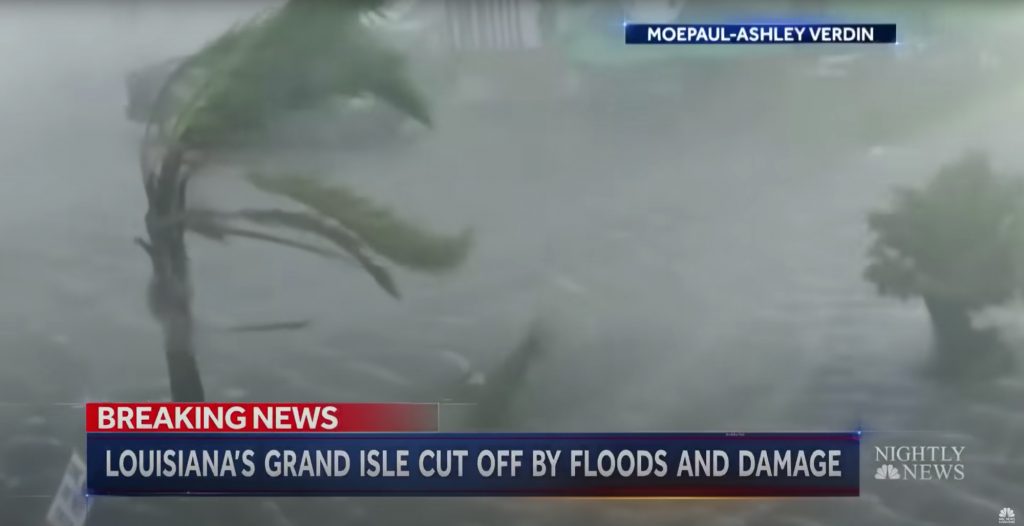
Gathered by Victoria Savoy, photo editor Hurricane Ida is not the first, nor will it be the last storm to hit Grand Isle. As a barrier island, Grand Isle has been the target of many storms through the years. National and local media have covered these storms, leaving a record to tell the story of Grand Isle’s inseparable history with storms. Hurricane Ida Past Hurricanes Hurricane Ida All Local National NBC The Guardian Fox 8 WWL TV Good Morning America CNN WDSU CNN USA Today Nola.com WALA TV WDSU Daily Advertiser Houma Today WDSU Houma Today The Advocate Previous Storms October 6, 1893 September 22, 1909 August 17, 1915 September 25, 1956 September 25, 1956 October 2, 1956 September 13, 1965 September 7, 1974 September 8, 1974 August 8, 1984 July 19, 1997 September 20, 1998 September 17, 2005 September 28, 2005 November 11, 2005
Storm Stories

A podcast series about hurricane experiences on Grand Isle.
Family Memories
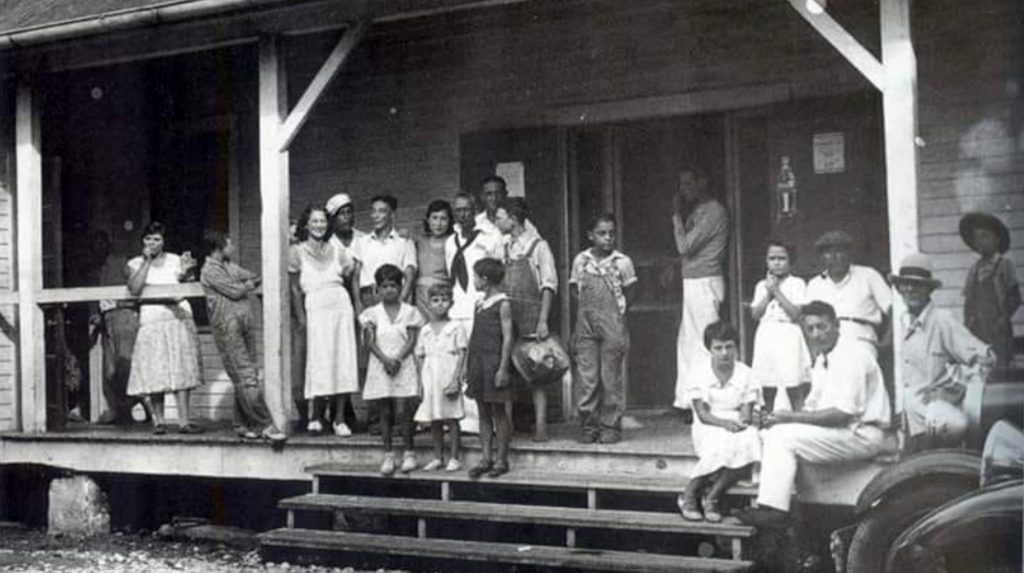
By Shannon Royal, video editor
An Inland Barrier
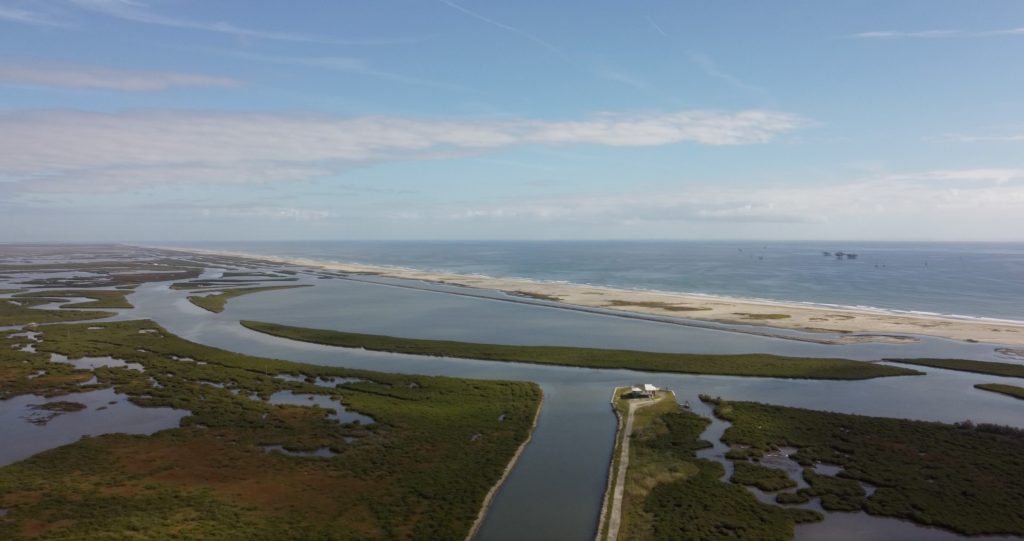
By Jonathan Eastwood , Features Editor Inland South Louisiana communities like New Orleans owe a lot to barrier islands like Grand Isle. “[If] Grand Isle goes, Bourbon Street’s gonna have eight feet of water,” Grand Isle Mayor David Camardelle says. “It’s coming.” “[If] Grand Isle goes, Bourbon Street’s gonna have eight feet of water. It’s coming.” — Mayor David Camardelle Grand Isle is one of many barrier islands that are made of sediment deposited by the Mississippi River. The islands’ position at the edge of the incoming tide prevents storm surges from devastating land further inland. But just as the waves build up barrier islands, they also tear them down. On August 29, 2021, Grand Isle was devastated by Hurricane Ida. But the direct hit to Grand Isle also helped keep storm surges from destroying inland Louisiana. Grand Isle resident Shane Holder tended to his RV park weekly until it was covered with several feet of sand. “All of this used to look like a golf course – I mean I mowed two or three times a week,” Holder says. “[Now] it’s deep under sand all the way across to that house.” The National Weather Service reported that the levee breach caused overflow up to 10-11 feet on the west end of the island and five to six feet on the east end. The surges removed some low-lying structures from their supports and stranded more than 200 residents in nearby Lafitte and Jean Lafitte. Barrier islands like Grand Isle serve as more than just protection against storms. They also form a separation between estuaries and open gulf waters. The mix of fresh water and salt water along with calmer conditions in the estuaries prove vital to many species and environmental functions. “The shrimp are dependent at certain times of coming up into the estuary with the grasses, with the calmer and slightly fresher conditions, and then later going out into the gulf,” Coastal Protection and Restoration Authority Darin Lee says. Barrier islands form not when a delta is building from a river’s deposit of sediment, but rather when sea water starts washing the sediment away from the coast. Because of man-made canals and levees sediment is no longer being deposited in the Grand Isle region, endangering the existence of Grand Isle and other nearby islands. “If left to their own devices at this point, the answer is ‘no – they will not come back’,” Lee says. “There will be no new delta formed and no ability for these barrier islands to rebuild.” Mayor Camardelle wants to place rocks in the water to protect the island from storm surges and to rebuild the coast. “You can see where it was built – where the rocks make the little V – the sand’s building up . . . I could put all the rest of the rocks for about 50 million dollars and I could break the surge – about 12 [to] 15 feet of water,” Camardelle says. Placing rocks is not as easy a solution as it seems, however – for multiple reasons. Rocks will simply manage the existing sediment on Grand Isle and prevent its loss, meaning sand will still need to be pumped to Grand Isle occasionally. Additionally, barrier islands form in chains as an interdependent system. Sediment from one island gets washed away and deposited at another island. Rocks would prevent another island from receiving the sediment it needs to exist. “If you put rocks at Grand Isle then it affects, maybe, Grande Terre,” Lee says. “It is not always going to solve your problems.” Grand Isle’s role as a barrier island leaves it to protect inland Louisiana by taking the impact of storm surges, regardless of Mayor Camardelle’s steps to lessen the impact of future storms Grand Isle will Disappear darin lee Coastal Protection and Restoration Authority
Grand Isle’s Changing Landscape
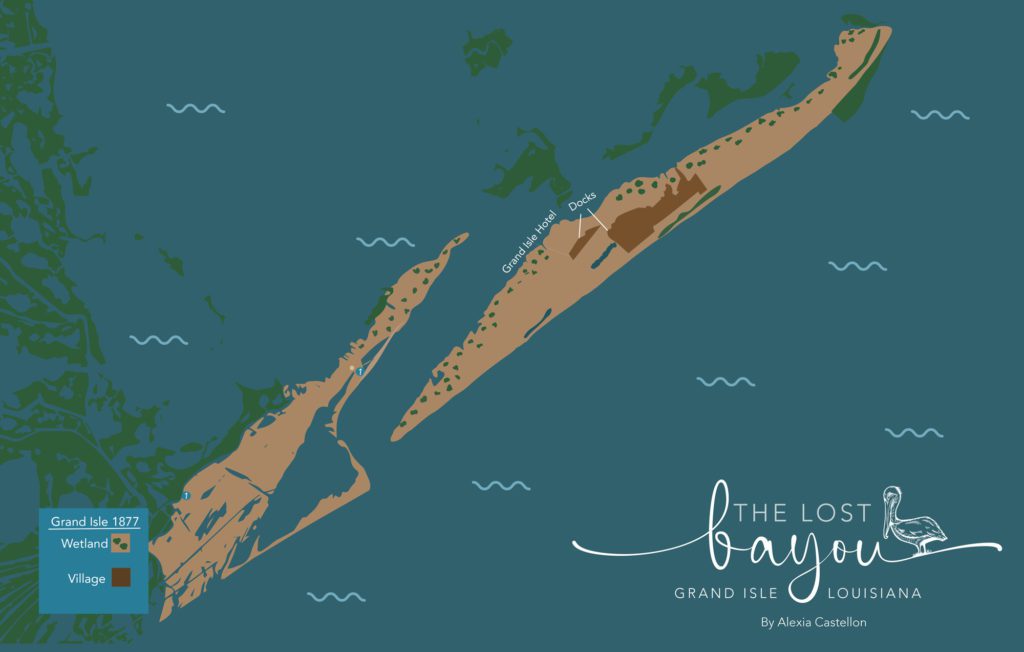
By Alexia Castellon , design editor Today 1983 1955 1932 1877 Today 1983 1955 1932 1877
The Lost Bayou: Grand Isle
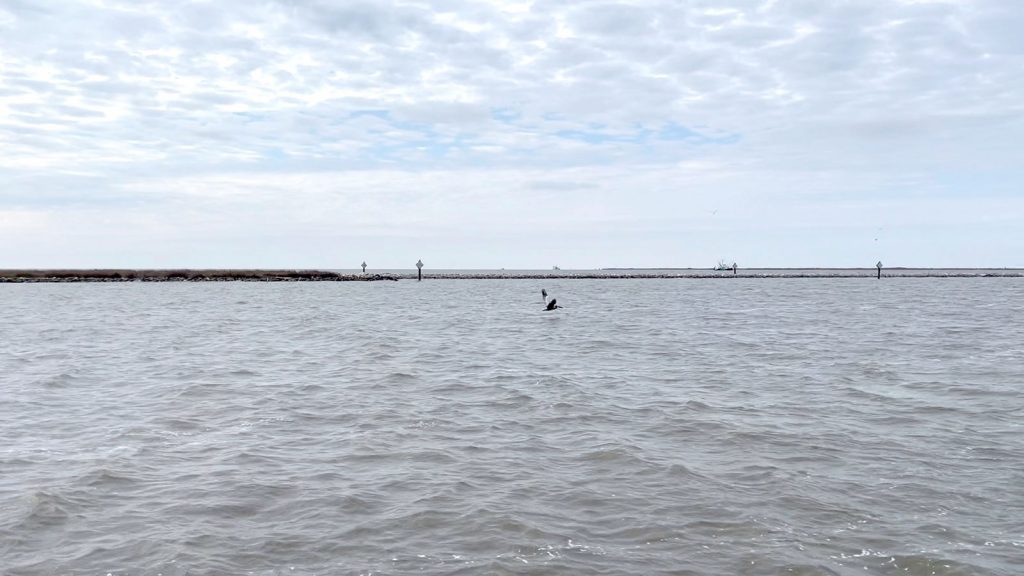
By Jonathan Eastwood & Kristen Rodrigue, Features Editor & Managing Editor What was once one of Louisiana’s most popular island oases, Grand Isle now lies in shambles — homes destroyed, businesses in ruins and lives changed forever. “It was tragic – so shocking, I still have no words,” says long-time Grand Isle vacationer Gregory Autin. “It looked like a nuke went off, you couldn’t even see the road – it was just covered in sand.” “It was tragic – so shocking, I still have no words. It looked like a nuke went off.” On August 29, 2021, Hurricane Ida hit the Bayou Region of Southeastern Louisiana, causing mass destruction and leaving the low-lying island town of Grand Isle especially devastated. Nearly eight months later, Grand Isle is still struggling to recover. Many homes, businesses and camps remain in disrepair. Grand Isle resident and business owner Shane Holder says his RV park is still buried in sand after a levee was wiped out by waves during the storm. “You can’t tell it now, but from right here to over yonder there was no levee,” he says. “It completely failed.” While Mayor David Camardelle and members of the Town Council fight to bring back Grand Isle, the rest of the world – and even much of Louisiana – remains unaware of what the island continues to face. “They think normal life is happening here, and it’s not,” Camardelle says. Despite the hardship Hurricane Ida brought when it landed in the Bayou Region, Camardelle and the residents of Grand Isle are determined to keep fighting for their beloved island-paradise. A framed poster on the mayor’s desk in the temporary town hall reads, “As long as there is one grain of sand on Grand Isle, we are going to plant the American flag. We are not going anywhere.” In this issue, we will tell the story of Grand Isle: the community that has lost so much, and the people who are fighting to bring it back.
Hurricane History
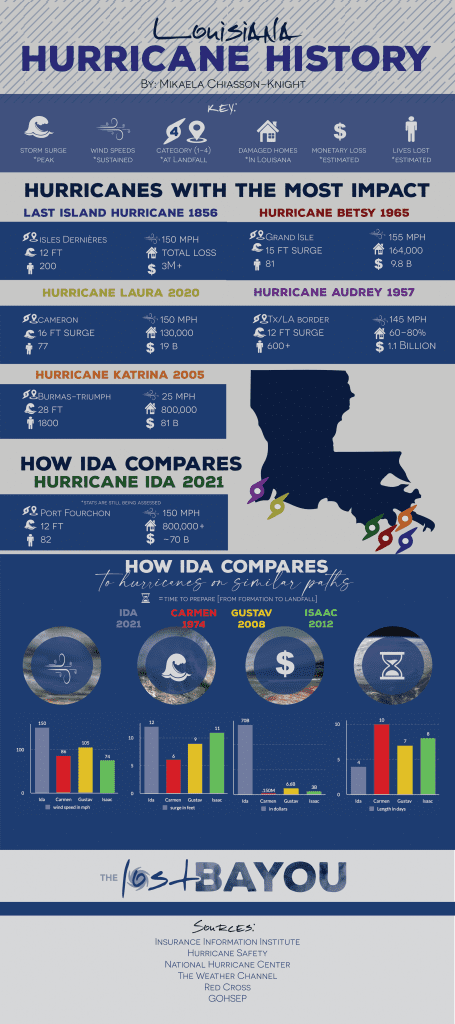
On the coast of the Gulf of Mexico, Louisiana has no history without hurricanes. But how does 2021’s Hurricane Ida stack up against some of the region’s other storms?
News Coverage
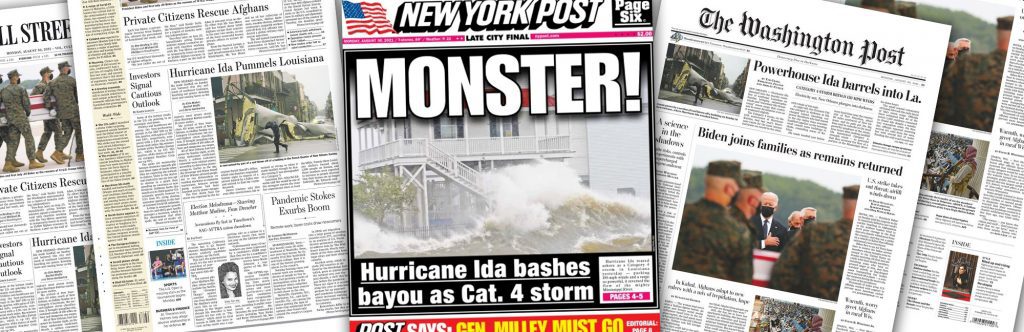
National and local news all covered Hurricane Ida’s buildup, landfall and aftermath. Each told the story in a different way. Here’s a sampling of various coverage of the Bayou Region as the storm unfolded. All Local National The Advocate 4WWL CNN WDSU Nola.com The Advocate HTVHouma NBC Houma Today CBS ABC The Advocate
Loss of Businesses
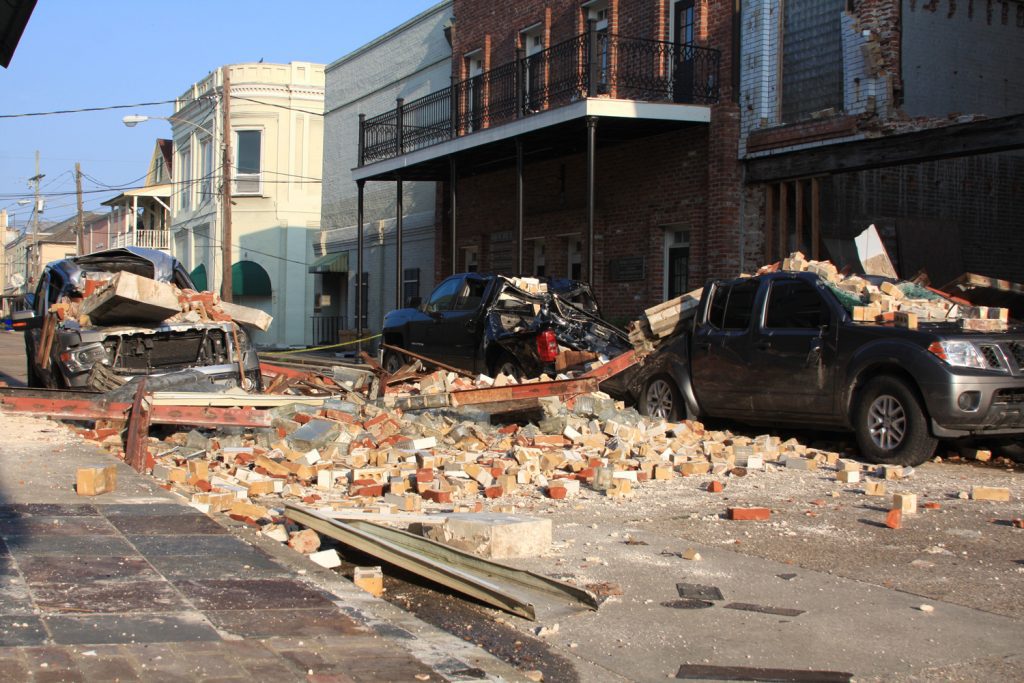
By Dex Duet, Features editor Hurricane Ida’s destruction put the bayou at a standstill. It halted the overall sense of normalcy, especially for business owners who had to deal with damages to both homes and businesses. Brenda Dardar Robichaux, the owner of Chez Felicite, a local wedding venue and bed and breakfast, was grateful to have her business after Ida. This wasn’t just because she had a building where she could do business again, but the building also became their new home. And now, with wedding season in full swing, she is back in business, working out of the house she is living in. The grounds have been modified to accommodate their new lifestyle. “Our clients suffered devastation to varying degrees,” she says. “They lost their homes and no longer had the resources to be able to host their weddings or events they had planned. We felt that we wanted to help the community, so we gave full refunds to anyone who could no longer host their weddings because of Ida’s devastation.” Another business owner, Janabeth Daigle, owner of Le Bijou Hair Salon and Day Spa, suffered a major hit from Ida. She lost her entire roof, and part of the ceiling caved in, forcing her to gut part of the business, rendering it unusable. With half of her business destroyed, Daigle is currently operating out of one of the last rooms left in the building. Her friends that she evacuated to came to the rescue after the storm to help her get back on her feet as soon as they could. She recalls the help by saying, “My friends from Mississippi came the following weekend. Six men, two women, three trucks, a trailer, a four-wheeler, chainsaws, a heart of gold, and christ-like people. They made it happen in seven hours and drove five hours back.” Acting quickly, Daigle started moving furniture and belongings around to prevent any further damage. She had help from the community and her loyal customers. Daigle, being a former teacher and cancer survivor, finds herself having to shift her mindset from giving to receiving. “When you’re a giver, you want to help people all the time, but when you have to sit back and receive, it’s not so easy,” she says. “It’s like inhaling and exhaling; part of giving is receiving. You cant an exhale without an inhale. Someone has to be a receiver for someone to be able to give.” Some businesses are vacant because the owner’s home’s damage forced them to leave. Divine Martin, a former Houma resident, recently moved to Colorado after his apartment complex was damaged by Ida. He left behind his family-owned business, Trap Seafood, and Wings, which has yet to open back up. Trap seafood is located on the east side of Houma and serves up authentic cajun meals. The restaurant has a small amount of damage and is undergoing renovation. “We’re currently in the process of remodeling and repairing what was damaged so we can open for business hopefully in the first quarter of next year,” he says. “We’ve been out of business since the storm hit on August 29th, so we’re eager to get back to what we do best, which is serving our #FoodForTheCulture back to Houma, LA.” https://youtu.be/bkXx_aFTlgAhttps://youtu.be/myE_-ZmOqg8https://youtu.be/ptR6K4cgYyU
Restoring Power
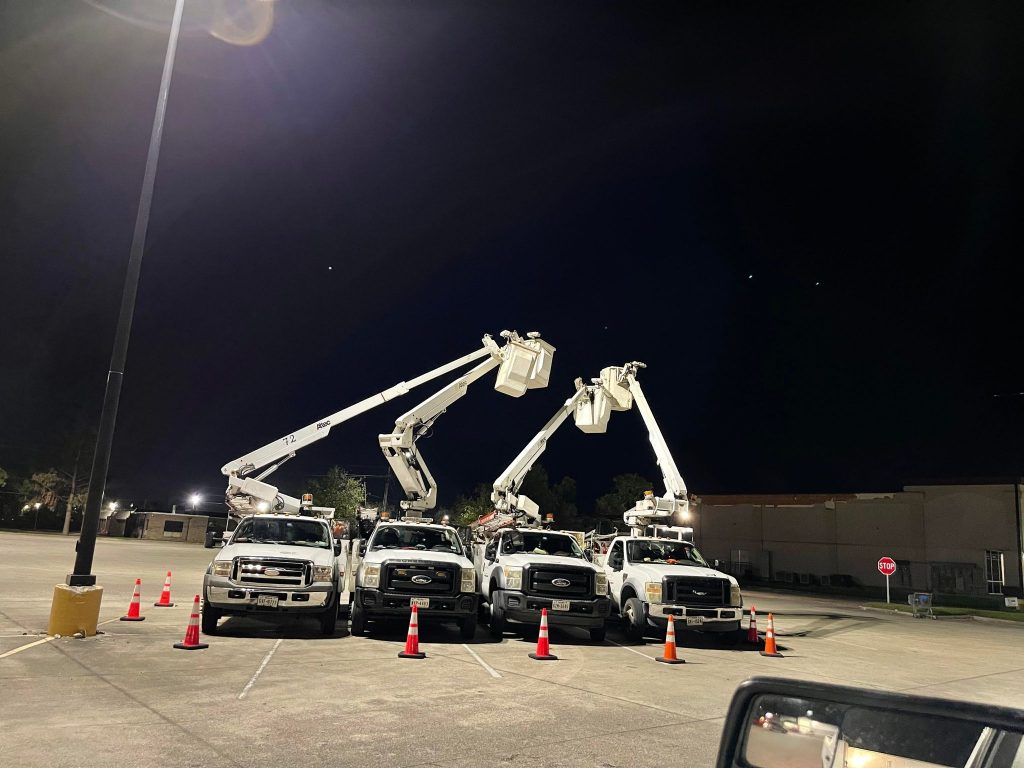
By Aaron Schaubhut Podcast Editor Hurricane Ida is already considered one of the most damaging storms of all time, destroying structures and leaving millions without power. While residents looked to pick up the pieces, linemen came from all over the country to help restore the power needed to rebuild. And while many came from far away, some, like Drake Badeaux, Entergy worker and Des Allemands native, went to work even while his community was severely damaged. “My house lost its roof just like everyone else in the neighborhood,” Badeaux says. “It was weird to work so hard to help other people then to come home and have to work on my own house.” Des Allemands was one of the last towns to expect power after the storm, according to Entergy. Some neighborhoods were not expected to have power back until late September, almost a month after the storm’s Aug. 29 landfall. And while many desperately need power, Badeaux says returning electricity after a storm could be a dangerous process. “There’s so much damage to certain areas after a storm that it’s dangerous to just go in and start fixing things,” he says. “A lot of debris and a lot of trees. It was difficult to get into areas we needed to get to because of all the damage. Proper safety precautions needed to be in place.” Despite being a native to one of the hardest-hit towns in Louisiana, Badeaux was not sent to work anywhere in Des Allemands. The damages he discusses mostly come from Lafourche Parish; another area devastated by the storm. Badeaux expresses his overall concern for friends and family during recovery. “I tried my best to keep my parents updated on electricity, but there was very little I could do to help them at the time.” Badeaux’s stepfather and senior Entergy lineman, Timothy Dufrene expresses similar testimony after the storm takes the entire home he has lived in for decades. Dufrene is no stranger to the catastrophic aftermath of a hurricane. In 2006, he assisted in returning power to the New Orleans area after Hurricane Katrina. “I’ve been seeing the damage storms can do for years and it still feels unreal. I lost my entire home in one night.” The two explain that the efforts to return power to Southern Louisiana may have gotten off to a rough start. However, cleaning efforts have helped. Badeaux explains that restoring power to neighborhoods in need began running more smoothly once things were cleared. “A lot of the poles were destroyed and needed to be replaced. Just like everything else after the storm, there was a lot of damage,” he says. Badeaux urges the people of Louisiana to remain patient and optimistic about the future. He explains that although there was a lot of damage done to the area, “Things are getting better and will continue to get better.” Entergy’s last outage map update shows that most outages are repaired. Linemen continue to work in St. James, Lafourche, and St. Charles parishes to restore power everywhere. Bayou Gauche Camps in St. Charles parish are the last areas estimated to regain power on Dec. 31. “I’ve been seeing the damage storms can do for years and it still feels unreal. I lost my entire home in one night.” – Timothy Dufrene, Senior Entergy Lineman The two explain that the efforts to return power to Southern Louisiana may have gotten off to a rough start. However, cleaning efforts have helped. Badeaux explains that restoring power to neighborhoods in need began running more smoothly once things were cleared. “A lot of the poles were destroyed and needed to be replaced. Just like everything else after the storm, there was a lot of damage,” he says. Badeaux urges the people of Louisiana to remain patient and optimistic about the future. He explains that although there was a lot of damage done to the area, “Things are getting better and will continue to get better.” Entergy’s last outage map update shows that most outages are repaired. Linemen continue to work in St. James, Lafourche, and St. Charles parishes to restore power everywhere. Bayou Gauche Camps in St. Charles parish are the last areas estimated to regain power on Dec. 31. Entergy linemen working to restore power to Terrebonne Parish. on Sept. 9, 2021. Photo credit: Drake Badeaux. Entergy linemen from the Raceland office after restoring power to parts of Terrebonne parish.