
Crafting Skins // Pitre’s Fur and Alligator
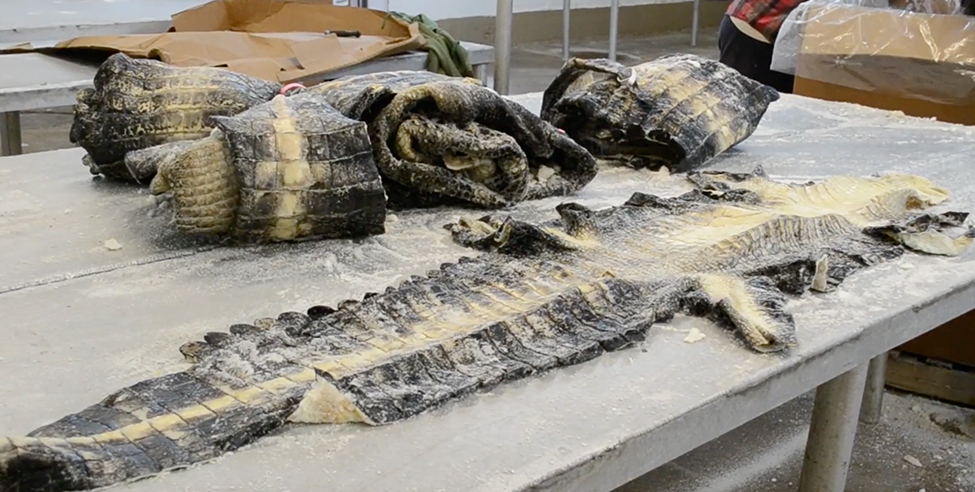
by Joel Miller, video editor & Amber Burton, managing editor
Dramatic Works // Queen Sugar & St. Joseph Plantation
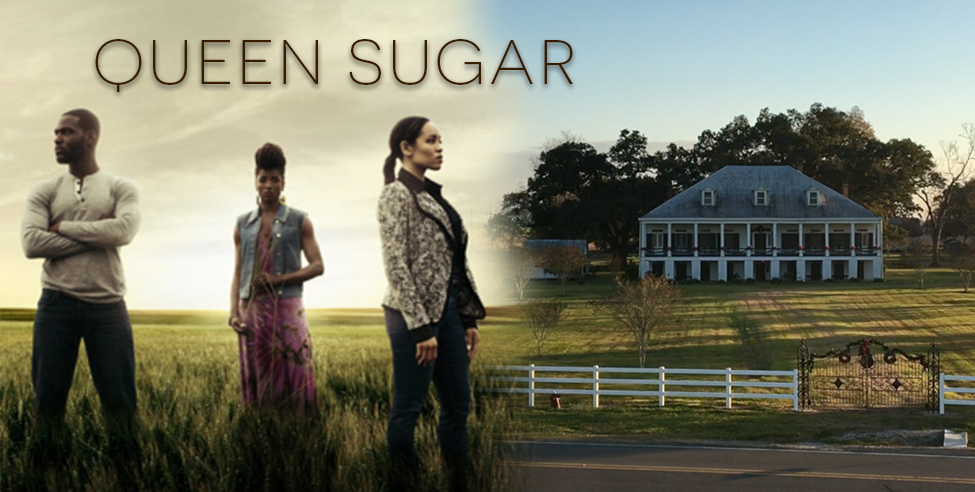
by Alvin Conley, special sections editor & Amber Burton, managing editor
Cajun Men Cook // Beau Brooks
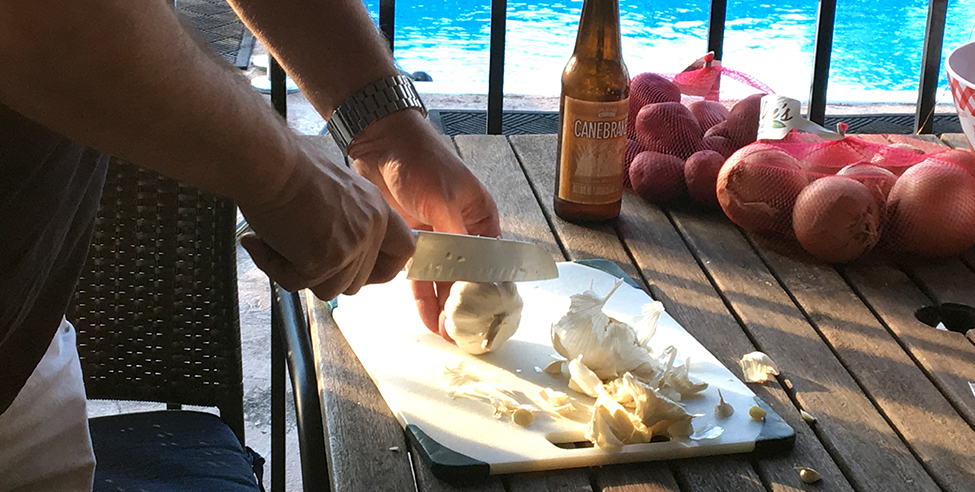
Rachel Klaus, co-features editor Bayou Region cooking isn’t just unique in flavor, but also who is stirring the pot. Unlike in many cultures where women do the majority of the cooking, Cajun men are often the ones who take the reigns in the kitchen. And that’s something Thibodaux-native Beau Brooks takes pride in. Brooks, an attorney and president of the non-profit organization of Upside Downs, says he thinks the reason why so many men cook in the Bayou Region is because they travel to places like their hunting or fishing camps. “Most of the time it is just a bunch of guys there and each one will cook a meal on a certain day,” Brooks says. “That’s just how people have grown up since they were little.” Marshall Welsh, chef and instructor for the Chef John Folse Culinary Institute, says one of the reasons why so many men cook in the Bayou Region is because of chefs like Justin Wilson, Paul Prudhomme and John Folse. “People grew up watching those guys on television, it made it seem like cooking was a good pastime,” Welsh says. “I think a lot of men cook because they think it is fun, especially since there is a unique culture of food in the bayou area.” Brooks says he actually got his love of cooking from his grandmother. “While growing up, I realized that my favorite dishes were the ones my grandmother cooked,” Brooks says. “When I went somewhere else and tasted the same meal, it was not the same. I picked up her habits and got her to teach me how to cook. I think over the years, I pretty much perfected all of her recipes, even though she did not follow any in particular.” Cooking to him is a stress reliever, and a way to pass a good time with friends and family. Like his grandmother, Brooks does not follow any certain recipe. Although Brooks can cook just about anything, his favorite things to cook are stews, gumbos, jambalaya and pastalaya. It is really anything that is native to Louisiana’s Bayou Region. No matter what he cooks or how he prepares it, his neighbor and friend, Codi Waguespack will eat any dish he puts in front of her. “My favorite things that he makes is his shrimp and crawfish stew, also the lima beans with a roux,” she says. “His lima beans are the best.” Brandon Ruttley, another friend and neighbor, says Brooks is a perfectionist when it comes to cooking and that he probably should have gone to culinary school instead of law school. “I think he gets ideas off of Pinterest and makes it his own,” Ruttley says. “Just about every other day he knocks on my door and drops off different foods.” From boiled seafood to a good old fashioned roux, finding good home-cooked meals will not be hard to come by since it is a part of the unique culture of South Louisiana. Ruttley says cooking is important to the culture because it has been carried through generation to generation and Brooks is helping the culture expand by instilling the value of fixing a home-cooked meal for his family almost every night, preserving his culinary heritage.
The Struggle to Work // The Thibodaux Massacre

by Rachel Klaus, co-features editor Work in the Bayou Region, just like much of the South, has many roots in slavery. Slaves were often field hands for sugar plantations, doing everything from planting the sugar cane, to plowing the fields, to harvesting and then making the sugar. And neither the work itself or the system for work were easy or pretty. One of the Bayou Region’s most violent examples of working in the shadows of slavery came on Nov. 23, 1887, when nearly 60 unarmed black laborers and their families were killed in Thibodaux by white vigilantes following a three-week sugar cane labor strike, according to John DeSantis in his 2016 book “The Thibodaux Massacre.” The estimated 10,000 laborers from Lafourche and three surrounding parishes went on strike for a livable wage to be paid in U.S. money rather than plantation script that could only be used at an individual, specific plantation store. “What they were paid, was essentially not enough,” DeSantis said. “They wanted a dollar a day and $1.25 a day if they worked through the night. They just did not want to be paid in script anymore.” The strike, in the middle of the harvest season, came after the plantations ignored the laborers’ demands for weeks. “Both sides were in fear and distrustful to one another,” DeSantis said. “A couple of days before the massacre Judge Taylor Beattie ordered a state of martial law so no one could enter or leave town. It made the strikers even more afraid. There were just so many factors that led up to the massacre.” In the end, the shooting lasted for more than 2 hours and killed men, women and children. And the effect on work in the Bayou Region would be the passage of laws by white democrats keeping sugar cane workers from organizing until the 1940s. Sugar cane workers loading mule-drawn cart (undated). Credit: Nicholls State Archives Workers on Laurel Valley rail car (20th century). Credit: Nicholls State Archives Owners of Laurel Valley among others in wagon with two plantation workers standing (20th century). Credit: Nicholls State Archives Worker fertilizing sugar cane at Laurel Valley using a mule-drawn car (1954). Credit: Nicholls State Archives Worker fertilizing sugar cane at Laurel Valley using a mule-drawn car (1954). Credit: Nicholls State Archives Laurel Valley Sugar House after a September 1965 hurricane. Credit: Nicholls State Archives Laurel Valley Plantation house (20th century). Credit: Nicholls State Archives Most likely Laurel Valley Sugar House (20th century). Credit: Nicholls State Archives Men with horse and farm equipment in sugar cane field (20th century). Credit: Nicholls State Archives Previous Next
Growing Traditions // Southern Roots Nursery
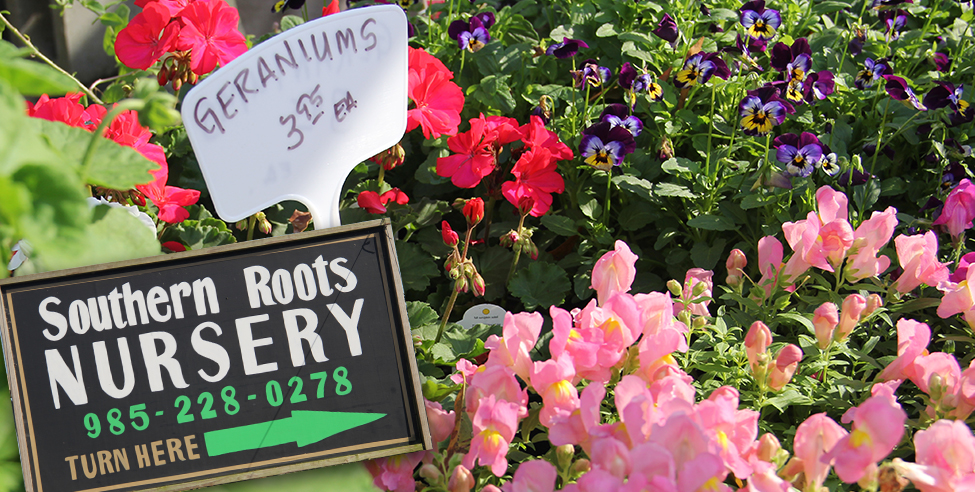
by Sylvia Masters, photo editor
Offshore Work // Families at Home
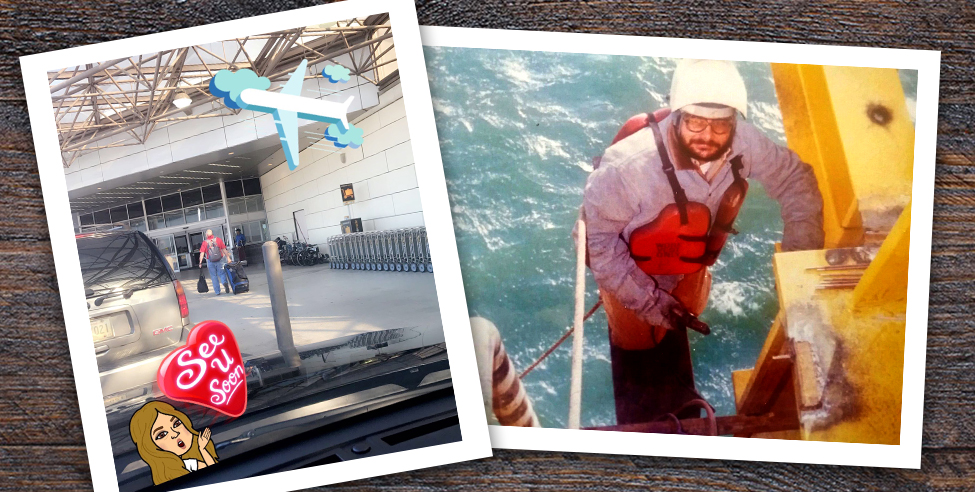
by Rachel Klaus, co-features editor The stories of work off-shore in the oil and gas industry in South Louisiana are often told— long, often dangerous stints away from home; but those lesser known are of the families who stay at home and support them. For Heather Stevens of Thibodaux, the holidays can be tough, especially since her husband is working offshore in Mauritania, Africa.Heather’s husband, Colt, works for Weatherford, one of the largest multinational oilfield service companies in the United States. Together, Colt and Heather have three children: 5-year-old twins Ana and Ady and 1-year-old Vander. And while Heather says her girls understand why their father is away, they still have mini-meltdowns from time to time when they are missing him. “The girls understand that their daddy is at work and that he does this for us,” Heather says. In addition to being the only parent when Colt is away, Heather also has her own business Belle Visage, a women’s clothing and skin care boutique in downtown Thibodaux. “I don’t sugarcoat it because it is hard,” she says. “Besides my business, I do makeup for weddings on some weekends, and when he is gone, I rely on my family members to help with the kids.” When Colt is offshore he is not only five hours ahead, but he is not allowed to use bandwidth for things like FaceTime when he is on the rig or drill ship. Heather says she thinks one day her children will completely understand why he works away most of the time, and sometimes she has to remind herself that she understands too. “Everything my husband and I do is for our family,” Heather says. “We want our children to have a great education and long-term stability. We hope one day that he won’t have to do this, especially as the kids get older.” Like Heather’s children, John Lefort, 30 of Cutoff, missed his dad too. Lefort’s father, Philip, worked as a welder offshore for Danos until John was a sophomore in high school and then he began work overseas for various contractors another 14 years working his way up to project manager for construction. “When you are real young, like 5 or 6, you catch on to what is going on,” Lefort says. “You understand and you wait for them to come in. It’s a hard thing for a kid when your dad is only there for truly half of your life.” Lefort’s father typically worked 14 days on and 14 days off, and sometimes 30 on and 30 off. But he says his dad always made up for the time lost when he was home. While his dad was gone, Lefort’s mom took care of both parenting roles. He says she did a good job, but every kid still needs a father figure. “As a child of a parent that works offshore, when you have a good job, the money is great,” he says. “You get to spend time together when they are there, but it’s hard when they are not there when you need them.” Colt Stevens leaving to work offshore. Heather and Colt Stevens with Ana, Ady and Vander. Colt Stevens playing with Van on break from working offshore. Colt Stevens, in from offshore, helping with one of his twins’ baseball games. Heather Stevens owns downtown Thibodaux boutique Belle Visage in addition to parenting three children while her husband Colt is offshore. Ana and Ady often help mom, Heather Stevens, at her Thibodaux boutique, Belle Visage. Heather Stevens takes over parenting Ana, Ady and Van while her husband Colt Stevens is working offshore. John Lefort with his dad, Philip, who worked offshore while he was growing up. Philip Lefort working on a rig offshore.
Working for Health // Colonel Nutrition
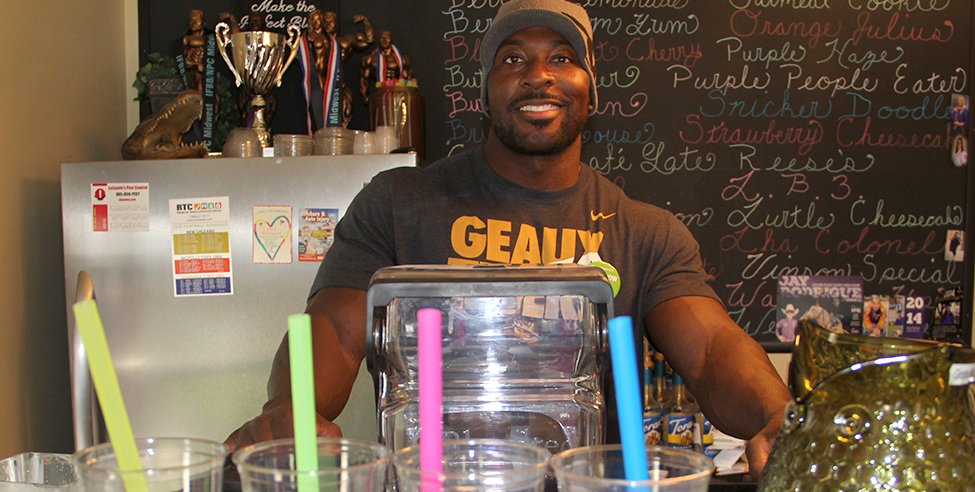
by Taylor Gautreaux, co-features editor No one in the Bayou Region is working to inspire community members to live a healthier lifestyle quite like Colonel Nutrition. Vinson Towns opened the smoothie and vitamin supplement shop, located at 1008 Canal Boulevard in Thibodaux, in late 2009. Vinson’s interest in nutrition and fitness developed after the passing of a loved one due to health-related issues. He became determined to improve his own lifestyle and opted to start a business that would help others do the same. At Colonel Nutrition, Vinson makes an effort to connect with every person they serve. The bond he builds with customers plays a large role in the shop’s success. “We text our customers on a daily basis,” Vinson says. “We communicate on a level where we’re making sure they are on the right track to reaching their goals. We want them to know we’re here to help them, not just do a business transaction.” Pictures of those customers before and after their transformations line one wall of Colonel Nutrition. Motivational quotes fill another. One regular customer, Brad Rodrigue, has gotten a smoothie from Colonel Nutrition every day for the past seven years as part of his daily workout routine. “The smoothies are unbeatable,” Brad says. “I always come here after visiting the Wellness Center and they automatically boost my spirits and really just make me feel good.” Vinson’s daughter Zoie helps operate Colonel Nutrition. Like her father, she is passionate about encouraging people to live a healthy life. “I love to see when people are impacted by the products that we carry,” she says. “People come in every day and tell me how our smoothies helped them lose weight or gave them more energy throughout the day. That’s what we want to hear.” Colonel Nutrition offers nearly 80 flavors of meal-replacement smoothies that satisfy hunger for typically three hours. Each smoothie has less than 250 calories and contains 25 grams of protein and 9 grams of carbs. For people who are interested in making their own smoothies at home, vitamin supplements can also be purchased at the shop. However, Colonel Nutrition offers more to the community than tasty drinks. They hold free fitness camps on Monday through Thursday evenings in Peltier Park. “All you need to do is show up,” says Vinson. “Show up with a good attitude and be ready to get a powerful workout in.” Vinson hopes for Colonel Nutrition to continue being a source of inspiration and encouragement for citizens of the Bayou Region to make healthier life choices and stay in shape. https://youtu.be/4oFQ2zW63Ms
Fueling Life // Gaubert & Waguespack oil
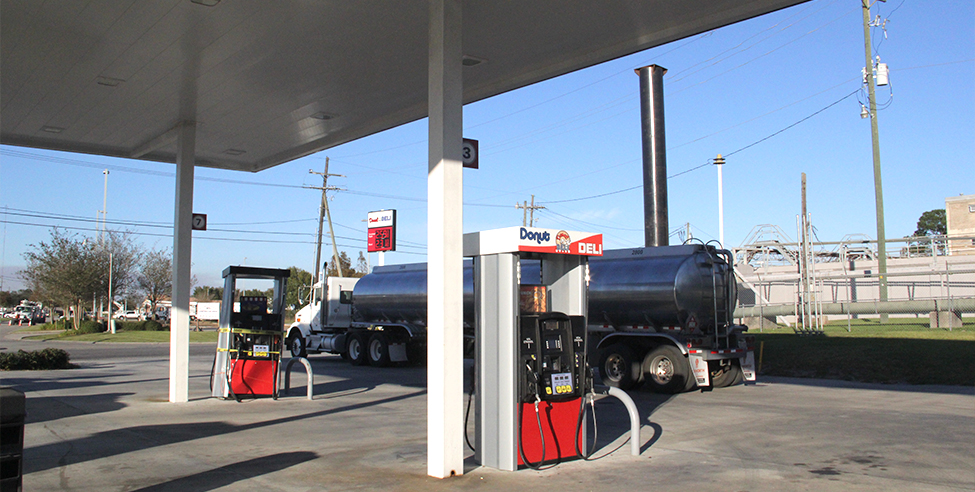
by Taylor Gautreaux, co-features editor The Bayou Region’s oil and gas industry dominates life in South Louisiana. From the local infrastructure to the job market, our communities are largely dependent upon the activities of this industry. “If you go to the town of Houma now and you know what it used to look like, it’s obvious what the oil field has done,” says Nic Schaff, a sales representative for Gaubert Oil Company. In many ways, the Bayou Region developed as a result of the industry’s prosperity. “Our schools are here to teach the children of the people who work in the oil field. We have restaurants to feed them. We have hospitals to care for them,” Schaff says. “These towns were built because of the industry and its workers.” The state is ranked second in the country in crude oil and gas production, as well as petroleum refining capacity. With nearly 18 percent of the country’s oil supply passing through Louisiana parishes, these natural resources allow the state to make contributions on a national level as well. “I think if you really look back at the history of the oil and gas industry as far as exploration, you’ll find that a lot of innovations used worldwide have come directly out of this region,” Schaff says. Louisiana is home to several startup companies working to advance technology for the industry. Improvements in the performance of oil drilling and production quality have also been made. However, the state has experienced about a 20 percent drop in crude oil production since 2013, according to Louisiana’s Department of Natural Resources. “It’s really impacted buying habits, which has affected everything else,” says Albert “Al” Waguespack Jr., president of Waguespack Oil Company. “People aren’t spending extra money because they’re having to save it to pay for the basics.” He adds that the industry has gotten slightly better over the past couple of months, but 30 to 40 percent of supply boats remain out of service. “Unfortunately, it seems it will be like this for a while,” Waguespack says. “The prediction of where oil and gas is headed changes every day.” The uncertainty of the industry’s future is due to low oil prices globally. Schaff says that it’s largely based on decisions that governments in countries like Saudi Arabia, Iran and Russia are making. Despite the industry’s decline, companies such as Gaubert Oil have continued business by finding alternate ways to operate. “We’ve diversified into other industries such as construction and transportation,” Schaff says. “We’re not solely relying on the oil and gas industry as far as drilling activities go.” He adds that the company employs nearly 350 people and has never laid anyone off due to the industry’s fluctuation. “As a workforce, we are very reliant on the oil and gas industry,” says Schaff. “But we are also innovative. We’ll always find solutions to get by.”
Blending Cultures // Bypass Fiesta Grill
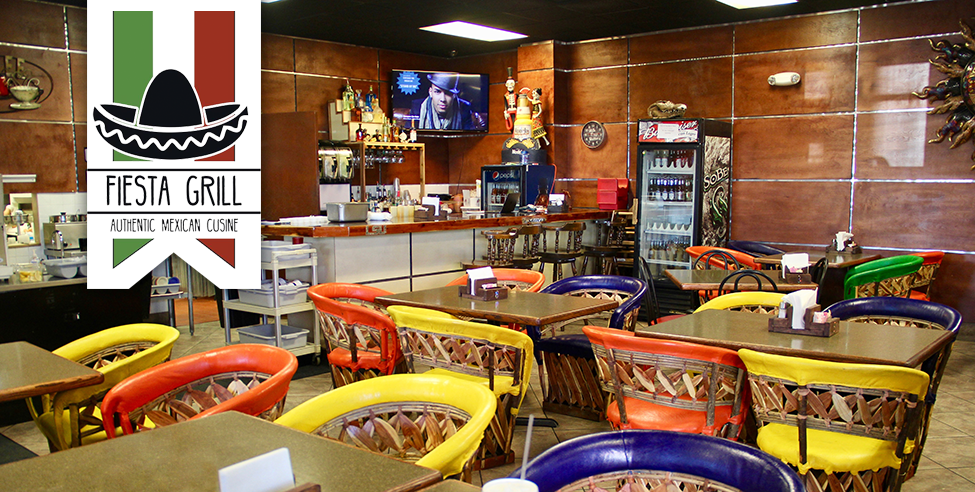
by Taylor Gautreaux, co-features editor Homemade dresses and sombreros line the walls. An alligator head rests on top of a drink cooler. While these items might not seem to go together naturally, they do at the Bypass Fiesta Grill, a Mexican restaurant whose owners bring their Central Mexican heritage with their adopted Cajun culture — a blended culture that focuses on family. Chon Medrano, a native of San Miguel, Zacatecas, Mexico, along with his wife Maryanna and their children own and operate the 2-year-old restaurant at 1818 LA Hwy 3185 in Thibodaux. “All four of our kids work here. I love it,” says Chon. “At first, none of them wanted a restaurant. I kept pushing because I always dreamed of having a business with my family. Now I’ve got it.” The restaurant helps introduce Mexican cuisine to the Bayou Region, while also embracing local foods such as poboys and beignets. The blending of cultures creates a dining experience that is unique to the area. “It’s a bit out of the way for me, but I make the extra effort to come here,” says Rita Chatsko, a customer of Bypass Fiesta Grill. “I like the options. I like that I can get a platter of fried catfish and enchiladas in the same place.” The Mexican food that Bypass Fiesta Grill offers in its four-page menu, though, focus on their family recipes — recipes from their region. The dishes range from pechuga a la plancha, grilled chicken breast topped with sautéed mushrooms and onions, to fajita tampiquena, Mexican steak served with cheese enchiladas. One of the most popular items is molcajete mariscos — sautéed pico de gallo, various seafood and cheese — served in a stone bowl. “It’s my favorite dish, and it’s a favorite of many regulars,” says Chon. “It’s items like molcajete that keep people coming back because they can’t get it from anywhere else around here.” Maryanna says that she is most proud of providing guests with fresh food. “If you want fast Mexican food, go to Taco Bell,” she says with a laugh. “We take our time here.” The family isn’t just particular about their food. After moving from Mexico to Las Vegas almost 20 years ago, Chon says he new it wasn’t home and began searching for just the right place. “I told my wife there had to be a better place to raise our kids,” says Chon. “I went to state after state searching for it. And on my way to Florida, I found it.” He says that he chose to settle in Louisiana because he was attracted to the friendly people and slow-paced environment. “Life is beautiful here,” says Chon. “Louisiana is full of happy, hard working people. It’s unlike anything I’ve seen before.” And while Chon worked as a painter for many years, his real passion and goal was the restaurant industry. He says that Louisiana’s food culture was another factor that drew him to the state. “I could visualize myself and my family with a restaurant,” says Chon. “So I kept picturing it and eventually it came to life.” His daughter Alondra says that the business has brought the family closer together. “It was a challenging experience because we had to adjust our lifestyles,” she adds. “It can be very time consuming, and it’s a lot of responsibility. But Bypass Fiesta Grill has become a second home.” With no experience in the food industry, the family had to learn the ropes. “You have to know what you’re doing, and I think we’ve really caught on with Bypass over the last two years,” says Chon. The Medranos are expanding their business with another restaurant on Canal Boulevard that will open in the next few months. It will have a drive-thru and outdoor seating, two features that Bypass Fiesta Grill doesn’t have. “We’re taking it slow,” explains Chon. “The new restaurant won’t be anything major, but it’ll be another stepping stone to bigger and better things.” The family says they are excited to continue serving the community and offer Thibodaux a new option for Mexican food in the upcoming months. https://youtu.be/YfmiJNsO9Xs
Work from the Heart // Conley Catering

by Alvin Conley, special sections editor Dishes clinging, food sizzling, and heat refusing to go unnoticed all while the soft R&B music plays in the background could only mean one thing in the Conley household: Grandma’s in the kitchen again. The smells of different meats, vegetables and desserts creep their way out of the kitchen and take over the house. Shortly after, one by one, pots filled with beans and gumbos, pans containing pastas and meats, and trays filled with cakes and cookies make their way to the dining room, where everyone (and their taste buds) gather to prepare for another Diane Conley meal. Located in Houma, Louisiana, Conley Catering owner, Diane Conley, has been running her own catering company for about 10 years. Diane began dibbling and dabbling in the kitchen as a teenager, but really began to take cooking serious in her early 20s. “I knew it had to be a natural talent when people constantly complimented my dishes,” Diane said. Now, over 40 years later, Diane loves to cook as much as when she was younger. In real estate, it’s said that the most important part is location, location, location, and in any culinary related field, Diane said the most important part is presentation, presentation, presentation. “I like for a person to eat with their eyes before tasting a dish and the only way to accomplish that is through presentation,” she said. Houma resident, Pamela Reich said that she loves ordering from the Diane — not only because she’s a local, family-owned business, but because you can see the love and hard work that goes into every dish. “Every year when [Diane] does orders for either Thanksgiving or Christmas I make sure to order food and two sweet potato pies; one for the family dinner and another for myself,” Pamela said. On top of being the owner of a catering company, Diane has been a Full Service Manager at TARC Restaurant & Gift Shop located at 1315 Grand Calliou Road, in Houma, Louisiana for over 24 years. At TARC, which is a facility that trains mentally and physically disabled persons to become independent livers, Diane manages the restaurant, gift shop and cafeteria. Paula Murray, a client of TARC, said that she enjoys working with Diane. Paula, along with the other students/clients of TARC typically work in the restaurant as servers. “Ms. Diane is nice,” said Paula. “She helps us in the restaurant and sometimes we help her cook.” Diane said that the clients help her make things such as salads, and while they no longer do any major cooking, they would often help make fried foods and breakfast items. “Ms. Diane is a good teacher,” Paula added. “She makes sure we know exactly what to do so the food is perfect when we serve it.” With her culinary background being rooted in South Louisiana, Diane said that bread pudding, sweet potato pies, seafood tarts and chicken sausage gumbo are her most frequently requested items, and she personally enjoys making meatloaves and different types of beans. “Know that there’s more to being a culinary cook or chef than cooking,” Diane said. There’s purchasing, preparation and cleaning involved, but if you love it, it’s all worth it.” https://youtu.be/hwbLZ87zL94