
Guards & Camp Workers

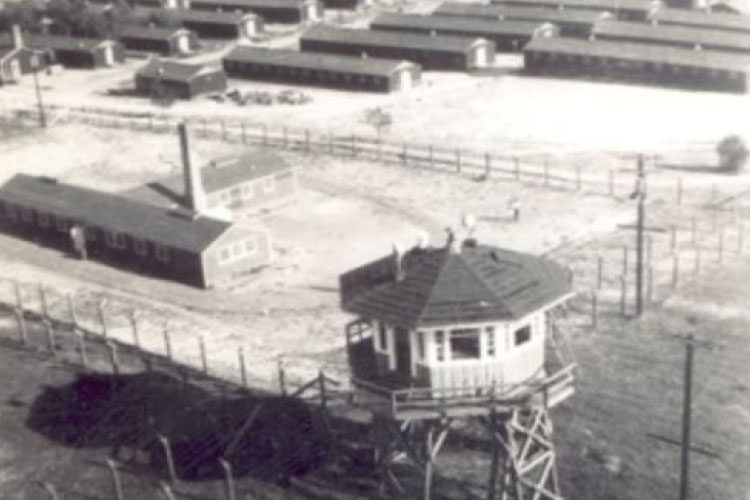
aynsley andras staff writer Inside the prisoner-of-war camps, a team of guards, workers, and overseers ensured the prisoners were well-supervised and cared for, with many duties extending beyond maintaining order. Many people worked inside the prisoner-of-war camps, from staff in the kitchen and dining hall to those providing medical services and guarding the prisoners. Tall wired fences, punctuated by guard towers, surrounded the entire camp, according to Kelly Ouhcley in POW Camps in Louisiana. Glen Falgoust, a journalist who researched the Donaldsonville POW camp, says, “Each one of these POWS probably had as many as 10 support people wrapped around them to be able to make sure they [prisoners] were properly taken care of.” “Each one of these POWS probably had as many as 10 support people wrapped around them to be able to make sure they [prisoners] were properly taken care of.” glenn falgoust The guards’ work continued even after the prisoners were sent to work in the fields. Everet Hallback’s father worked as a mechanic at one of the prisoner of war camps. “When he didn’t have anything to repair, he would take them and put the POWs in the flatbed truck and then transport them and kind of watch and see to make sure they all wouldn’t run away,” Hallback says. According to a column in the Houma Today by C.J. Christ, a designated area was made for the guards to sit where they could observe all the prisoners. Some American workers at the POW camps brought water to the prisoners on wagons while the prisoners worked at the sugarcane fields. The guards and workers still treated the prisoners with respect, says Linda Theriot, secretary at the Houma Military Regional Museum. “Prisoners here were well taken care of and the guards, not only the guards but the property owners, treated them good,” Theriot says. “Some did not want to go back home.” Laton Tudor, John Kalinoski, Barnes, Johnny Andrews, Charles Torrey, “Pop” Alvin Clary, and John Hoffman in front of Camp Ruston barracks. Photo Credit: Louisiana Tech University Military employees John Hoffman, Mike Harris, Mary Snelling, and Charles Torrey in front of Camp Ruston Headquarters. Photo Credit: Louisiana Tech University Portrait of seven female camp workers on the Camp Ruston grounds. Photo Credit: Louisiana Tech University Torrey, Andrews, Tuminello, Farmer, and Kalinoski standing in uniform at Camp Ruston. Photo Credit: Louisiana Tech University Six mess hall employees sitting on the mess hall steps at Camp Ruston. Photo Credit: Louisiana Tech University Portrait of Bill Sherer and Nancy Colvin standing in front of Camp Ruston. Photo Credit: Louisiana Tech University Orderly room for the US Army guards at the prisoner of war camp at Camp Polk, La. Photo Credit: Rickey Robertson Collection Mess Hall at Camp Polk German POW Camp with 2 German POWs pictured. Photo Credit: Rickey Robertson Collection
Camp Activities
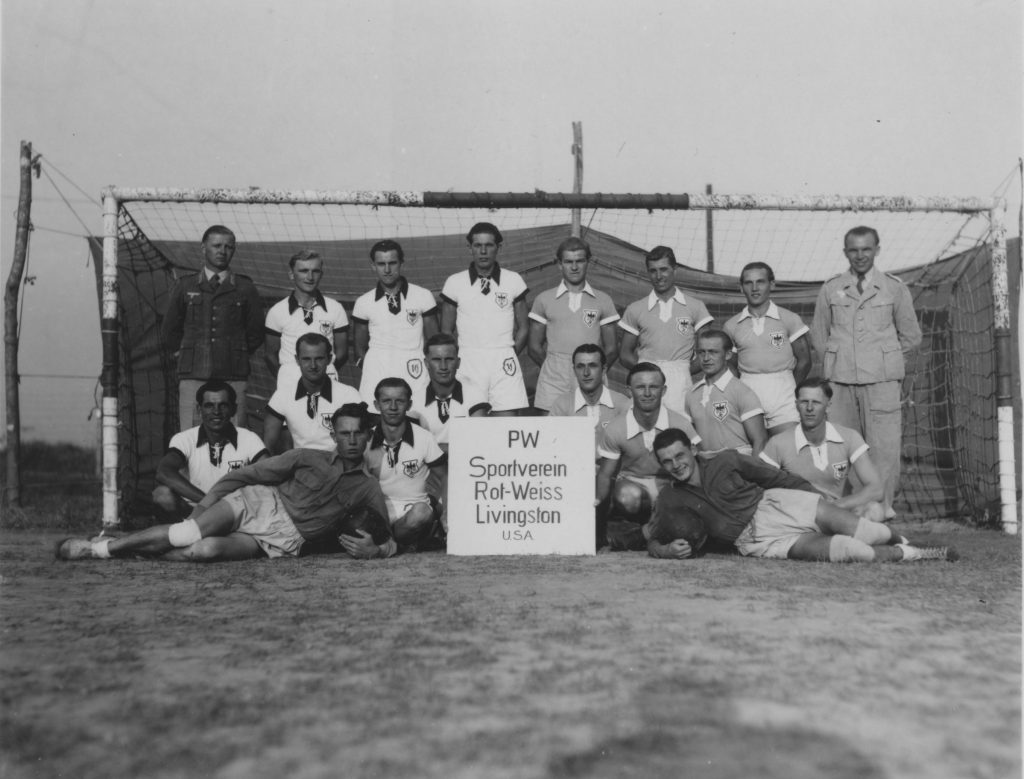
aynsley andras staff writer Prisoners of war engaged in a variety of recreational and creative activities during their time in captivity. From playing soccer and card games to painting and woodworking, these activities offered the prisoners both physical and mental respite. For most of the day, the prisoners of war worked in fields and were occasionally allowed to enjoy recreational activities. Everet Hallback, whose father worked as a mechanic while the POW camps were in South Louisiana, says the prisoners enjoyed playing with the stray dogs while waiting for transportation back to the camps. And some liked to play various card games once they got back to the camps. Glenn Falgoust, a journalist who researched the Donaldsonville POW camps, says, “They played soccer, had a little sports field, and a dance hall.” “They played soccer, had a little sports field, and a dance hall.” Glenn falgoust In addition, some prisoners painted. Linda Theriot, an executive at The Houma Regional Military Museum, says a Houma camp prisoner, Otto Webber, painted multiple paintings, including a self portrait with his son. Some prisoners were interested in woodworking and masonry. “Sometimes there were training walls, like along a ditch or steps up to a house or up a hill,” says Brian Davis, executive director for the Louisiana Trust for Historic Preservation, about the Ruston camp. “Some of them were laid out by prisoners who would do work details out in the community at the time as well.” However, not all activities were physical like playing sports. Some of the activities were there to help the prisoners spiritually or mentally. A few camps allowed Catholic Mass for prisoners. In addition, Theriot says some prisoners may have been taught by teachers employed by their employer’s families — like the Matherne family who employed POWs from one of the Houma camps. The Thibodaux camp’s POW soccer team. Photo Credit: Nicholls Archives Italian POWs attending mass in New Orleans. Alvin Pop Clary and William Bill Bernsten, in a Camp Ruston baseball uniform, at Camp Ruston. Photo Credit: Louisiana Tech University Camp Ruston Collection Houma POW Portrait Artist: Otto Weber An interview with Dan Davis about the portrait of his mother Portrait of Peggy Toups painted by German POW Otto Weber in 1944 at the Houma camp. Photo Credit: The Regional Military Museum Art at the Camps A painting from a photo by Otto Weber who was a German POW in the Houma camp. Photo Credit: The Regional Military Museum A drawing of German P.O.W. Camp Como done by Puelli at Camp Ruston. Photo Credit: LDL/Louisiana Tech University/Camp Ruston Collection Sketch drawn by a German POW of the PeeWee Falcon House in Donaldsonville. Photo Credit: Glenn Falgoust A model with “Gott Mit Uns” on it, made by German prisoners of war at Camp Ruston. Photo Credit: LDL/Louisiana Tech University/Camp Ruston Collection. Drawing made by Prisoners of war interned at Camp Ruston. Photo Credit: LDL/Louisiana Tech University/Camp Ruston Collection. Drawing of a destroyer done by a prisoner of war interned at Camp Ruston. Photo Credit: LDL/Louisiana Tech University/Camp Ruston Collection. Drawing of a horse and sleigh done by a prisoner of war interned at Camp Ruston. Photo Credit: LDL/Louisiana Tech University/Camp Ruston Collection. Drawing of a Mercedes Benz done by a prisoner of war interned at Camp Ruston. Photo Credit: LDL/Louisiana Tech University/Camp Ruston Collection Drawing of a ship at sea by a prisoner of war interned at WWII P.O.W. Camp Ruston. Photo Credit: LDL/Louisiana Tech University/Camp Ruston Collection. German P.O.W. constructed replica of the Rhine Castle. Photo Credit: LDL/Louisiana Tech University/Camp Ruston Collection. Model castle made by the P.O.W.s at Camp Ruston. Photo Credit: LDL/Louisiana Tech University/Camp Ruston Collection. Photograph of an Amphitheater constructed by German prisoners of war at Camp Ruston. Photo Credit: LDL/Louisiana Tech University/Camp Ruston Collection.
Eating at Camp
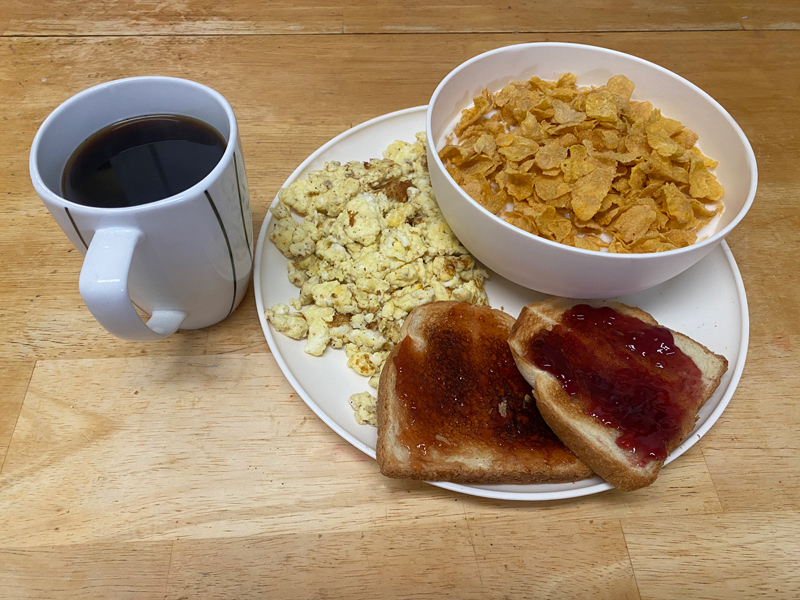
kade bergeron features editor During World War II, over 2,000 prisoners of war were confined in Louisiana’s Bayou Region, where they faced unfamiliar climates, terrain, and conditions. Yet, one aspect of normalcy remained — their food. Camps had dining halls, sometimes called “mess halls,” that were primarily used for dining and communicating. These spaces served as a common area for all residents of the camps to gather, according to an article in the Mississippi History Now. “Food was not a complaint for the prisoners. In fact, most of the food was prepared by German cooks with ingredients furnished by the U.S. Army.” The U.S. government provided ingredients that aligned with the typical nutritional standards of the 1940s era. Protein, grains, and vegetables were staples of the diet, as were some occasional forms of dairy, such as milk for coffee and butter for bread, according to Mississippi History Now. Although these rations were supplied throughout the camps in the Bayou Region, they also were able to get local food from the locals. “[Plantation owners] would take [prisoners] to their houses and feed them and treat them with some sweets, which was a rarity back in those days as it was rationed,” says Linda Theriot, secretary at the Houma Regional Military Museum. “[Plantation owners] would take [prisoners] to their houses and feed them and treat them with some sweets, which was a rarity back in those days as it was rationed.” Linda Theriot Due to the war efforts, supplies were limited, so the government provided nutritional rations based on availability. The meals were of the same variety that the military received, according to Mississippi History Now. Depending on the camp location and the amenities associated with that camp, some prisoners of war received higher-quality ingredients compared to prisoners at other local camps. The late Dr. Guy R. Jones was the primary physician who was responsible for monitoring the health of German prisoners of war at the Lockport/Valentine POW Camp. Jones said the prisoners received meals that were much better quality than those of the local Lockport residents, according to an article published by the Louisiana Historical Association. The war efforts put a strain on residents obtaining goods, but for the POW camp residents, the supplies administered by the U.S. government eased this burden. Some say that the prisoners were better off in terms of food quality (and quantity) than citizens who were rationing to support the American troops, according to the Louisiana Historical Association. In addition, the prisoners’ contact and work for local industries gave them access to other foods. “Working the farmland probably gave prisoners [the ability] to earn food on top of [the] wages set by the U.S. government,” says April Cortez, North Thibodaux resident, and native of the POW camp area. “The food supplied to the camps was just the beginning… The prisoners got additional food from the locals and the landowners for their work.” Daily German P.O.W.s breakfasts consisted of cereal (corn flakes), toast with jam, eggs, and coffee. Photo Credit: Garrett Weisiger Daily German P.O.W. lunches consisted of pork roast, carrots, and potato salad. Photo Credit: Garrett Weisiger Daily German P.O.W. dinners consisted of meatloaf, bread, and milk. Photo Credit: Garrett Weisiger
Louisiana Camps
jacob levron staff videographer The Place Bar served as the dining hall for the POW Camp in North Thibodaux. Photo Credit: Jacob Levron, staff photographer The POW camp in Valentine, Louisiana, in 1943. Photo Credit: Nicholls Archive The Thibodaux camp’s POW soccer team. Photo Credit: Nicholls Archives Tents at the North Thibodaux POW camp. Photo Credit: Nicholls State Archives, Litt Martin Collection Scrip, a form of currency valid only within the camp, paid to German POWs at the camp in Ruston, Louisiana. The Shreveport Journal March 16, 1979 other coverage Camp Ruston by Louisiana Public Broadcasting https://youtu.be/EjcbeKd4Y2s?si=zd_1HD2O4bP70Slu Most Endangered Places: Camp Ruston by Louisiana Trust for Historic Preservation https://youtu.be/vyS2VH9LoUw?si=2-0xu0Bo1ul2QBdR Thousands of German POWs in Acadiana During WWII The German P.O.W Camp at Camp Polk, Louisiana
Bayou Region Camps

aynsley andras staff writer More than 12,000 prisoners of war (POW) were sent to Louisiana during World War II, with 2,073 sent to camps in the Bayou Region to live in the communities and work the local industries. “You take a soldier out of the war to ship him 5,000 miles away,” says Glenn Falgoust, local historian and Vacherie native. “He’s as scared of what’s going on to him as the people sitting in their homes around Donaldsonville are of him. So it’s a mutual scenario.” “You take a soldier out of the war to ship him 5,000 miles away — He’s as scared of what’s going on to him as the people sitting in their homes around Donaldsonville are of him.” Glenn Falgoust Between 1942-1945, more than 425,000 prisoners of war were sent to over 700 camps throughout the United States, mostly located in the South and Southwest, according to the National Park Service. In the Bayou Region, POWs were housed in areas to help with local industry like sugar cane. “They [local men] just left the territory for like four years, so these sugarcane plantations were in trouble,” says Falgoust. “With no labor, you can’t produce a crop. So here comes the big question about the POWs, what to do with them.” Several camps were located in the Bayou Region including Donaldsonville, Thibodaux, Houma and Montegut. The Thibodaux camp, located in north Thibodaux on Coulon Road, housed 485 prisoners. Donaldsonville hosted one of the biggest camps in South Louisiana at the Donaldsonville State Fair Grounds, housing about one thousand prisoners, says Falgoust. The Houma camps came later because of a War Department rule preventing camps within 150 miles of any coast, according to the book Hard Scrabble to Hallelujah Legacies of Terrebonne Parish, Louisiana by Christopher E. Cencac Sr. and Claire Domangue Holler. But Louiaiana’s senators got the rule changed so prisoners could work in the sugarcane fields. The first camp in Houma was located near North Woodlawn Plantation house on Woodlawn Ranch Road and the second was on West Main Street between Boykin Street and Wolfe Parkway near Terrebonne High School. The prisoners ranged from 16-50 years of age, and life in the camps was strict, Falgoust says. The prisoners were not allowed anything relating to the war once they were captured. They were, however, allowed to write letters to their families. The POWs would work six days a week at farms and would start their days at 4 a.m. Prisoners in the Thibodaux, Houma, and Donaldsonville camps worked mostly in the sugarcane fields. Depending on the location of the camps, the prisoners would work on planting trees, shrubs, cotton, rice, and sugar. The local farmers were responsible for transporting their prisoner workers. Falgoust says the policy was that prisoners who did not work did not get to eat. Some of the prisoners of war got close to the families at the sugarcane farms where they worked. Some would even feed the prisoners. “I do know they were very hungry,” says Linda Theriot, an executive at Houma Regional Military Museum. “They didn’t get a lot of food. The owners of the plantation and the neighbors would invite them in to eat. These prisoners of war were not per se criminals for the community. They were criminals only for war.” Blimp at the Houma Naval Air Station where the German POWs were employed during WWII. Photo Credit: Regional Military Museum Hospital and kitchen at the Thibodaux POW campsite. Photo Credit: Evert Halbach Collection and Nicholls Archives & Special Collections Blimp base at the Houma Naval Air Station where the German POWs were employed during WWII. Photo Credit: Regional Military Museum German POWs walking at the Thibodaux campsite. Photo Credit: Evert Halbach Collection and Nicholls Archives & Special Collections Blimp base barracks at the Houma Naval Air Station where German POWs were employed to plant trees during WWII. Photo Credit: Regional Military Museum Thibodaux German POW campsite. Photo Credit: Evert Halbach Collection and Nicholls Archives & Special Collections Deflated blimp at the Houma Naval Air Station where the German POWs were employed during WWII. Photo Credit: Regional Military Museum Prisoner tents at the Thibodaux campsite. Photo Credit: Evert Halbach Collection and Nicholls Archives & Special Collections Sketch drawn by a German POW of the PeeWee Falcon House in Donaldsonville. Photo Credit: Glenn Falgoust
POW Camps in the Bayou Region

kade bergeron features editor When most think of World War II, the focus shifts straight to military involvement, Adolf Hitler, the Holocaust, and a war thousands of miles away. But the impact of the war came to the Bayou Region of South Louisiana as prisoners of war were brought into camps to help with local industry while workers fought overseas. “My mother and her cousins used to ride their bikes alongside the camp in Mathews when they were little,” says Wendy Phillips, resident of Raceland. “The prisoners were there, mostly to help pick up sugarcane scraps from the sugarcane company.” “My mother and her cousins used to ride their bikes alongside the camp in Mathews when they were little.” Wendy Phillips Throughout the region, prisoner-of-war (POW) camps were set up to contain the Axis soldiers and assist in labor shortages. In all, Louisiana was home to 52 POW camps throughout the state, according to the National World War II Museum. In the United States as a whole, more than 425,000 prisoners of war were sent to over 700 camps with most located in the South and Southwest, according to the National Park Service. There were multiple reasons for prisoners to be captured and dispersed at the camps. The start of this operation came from Great Britain, which had an abundance of prisoners who were filling up their camp’s space, therefore the United States agreed to take some in, according to the Prisoner of War Labor article in the Nicholls State University archives. Specifically, Louisiana had thousands of men deployed in the war, leaving farms, crops, and agricultural businesses without abundant labor. There were severe shortages of workers for these industries, and this allowed prisoners to be put to work to support and boost the American economy during the war. Prisoners mostly worked in the sugar, rice, and cotton industries, according to the Bayou Stalags article in the Nicholls State University archives. The Bayou Region parishes were home to over six camps including areas such as Thibodaux, Houma, Lockport, Mathews, and Donaldsonville, with a combined total of 2,555 prisoners as of 1945 data associated with the Nicholls State University Archives. The sole industry for the camps of the Bayou Region was sugar. For many current residents of the area, the prisoner-of-war camps along the bayous are completely unknown. Danielle Boudreaux, a resident of North Thibodaux, lives directly across the street from the POW camp location on Coulon Road in Thibodaux. Her home’s location is part of the historical site that housed 482 prisoners on its campus assisting directly in sugar cane production. “The neighborhood’s original two members just recently passed, and most likely the majority of the information regarding the camps went with them as well.” Danielle Boudreaux, who lives nextto the former Thibodaux POW camp location. “For me personally, I know very little about the camps, but I can guarantee there are some in this neighborhood that know nothing about it,” says Danielle Boudreaux, who lives on North 7th Street next door to the Thibodaux POW camp location. “The neighborhood’s original two members just recently passed, and most likely the majority of the information regarding the camps went with them as well.” Currently, the remnants of camps across the region have very little evidence of their past. It is hardly recognizable. The Thibodaux camp is now a residential neighborhood and a John Deere facility. The Lockport camp is a chemical plant, and likewise, the same can be said regarding the other Bayou Region locations. There are traces of families of German descent from World War II here in Southern Louisiana, as well as elderly community members who remember these camps from when they were children. To keep these local stories alive, Garde Voir Ci will unpack the life of the prisoners, the area of the camps, and their impact on the region. POW Camps in the United States during World War II The POW camp in Valentine, Louisiana, in 1943. Photo Credit: Nicholls Archive The Thibodaux camp’s POW soccer team. Photo Credit: Nicholls Archives Tents at the North Thibodaux POW camp. Photo Credit: Nicholls State Archives, Litt Martin Collection Scrip, a form of currency valid only within the camp, paid to German POWs at the camp in Ruston, Louisiana. The Shreveport Journal March 16, 1979 Thibodaux German POW campsite. Photo Credit: Evert Halbach Collection and Nicholls Archives & Special Collections Hospital and kitchen at the Thibodaux POW campsite. Photo Credit: Evert Halbach Collection and Nicholls Archives & Special Collections Portrait of Military employees John Hoffman, Mike Harris, Mary Snelling, and Charles Torrey in front of Camp Headquarters. Photo Credit: LDL/Louisiana Tech University/Camp Ruston Collection. Captured German submarine U-505 with escorts. Photo Credit: LDL/Louisiana Tech University/Camp Ruston Collection. Aerial view of road outside Ruston Camp. Photo Credit: LDL/Louisiana Tech University/Camp Ruston Collection. Camp Ruston’s Christmas Dinner Menu. Photo Credit: LDL/Louisiana Tech University/Camp Ruston Collection. Grave site of German Soldier Ernst Paul. Photo Credit: LDL/Louisiana Tech University/Camp Ruston Collection.
Detecting AI: How Good are You?

angel narcisse design editor
AI and Teen Emotional Health

angel narcisse design editor As AI tools like ChatGPT and Snapchat’s virtual assistant become a part of teens’ everyday lives, educators and mental health professionals raise concerns about its long-term effects on emotional well-being. Data shows that most teens believe that AI won’t negatively impact their mental health, according to a survey conducted by Education Week. With many students referring to it as a tool that can provide convenient answers without the pressure of a real conversation. A group of Thibodaux High School juniors shared a range of opinions on AI’s role in emotional support. While some found the “synthetic environment” of AI appealing, others pointed out its shortcomings. “It’ll reword the same thing, but it’s just surface-level answers,” says Claire Bolton, a junior at Thibodaux High School. “AI can’t have true empathy, and it can lead to potentially harmful or non-helpful advice, especially since chatbots aren’t trained to handle serious mental health issues.” Kim Thompson, LCSW Kim Thompson, a Thibodaux-based licensed clinical social worker, says AI could foster a “false sense of belonging,” misleading teens into thinking they’re building meaningful connections when they’re only engaging with algorithms. “AI can’t have true empathy, and it can lead to potentially harmful or non-helpful advice, especially since chatbots aren’t trained to handle serious mental health issues,” she says. Although Thompson acknowledges that AI has potential benefits by introducing users to tools like mindfulness and breathing exercises, it could complement human-led support. But she says it’s all about balance, recommending that teens “use it cautiously and in tandem with professional support.” AI on the brain AI effects on teen mental health High School Students AI Impact on mental health over the next decade Educators AI Impact on mental health over the next decade EdWeek Research Center survey, 2024 Educator responses from a January 2024 survey of teachers, school leaders, and district leaders. The chart for students shows responses to a March 2024 survey of high school students
AI Pervasive In Everyday Life
lance jones staff People engage with AI in their daily routines, from online banking to classroom lessons — unknowingly benefiting from its efficiency and speed like simple text message correction, navigation assistance, or personalized customer service. “It’s really impressive how AI can offer suggestions, correct our grammar, or even choose an emoji that fits our mood without us thinking twice,” says Michelle Caruso, Vice President of Student Affairs at Nicholls. “I use Google Maps to navigate my way to work every day and I never really thought about it being AI, but it’s literally guiding me to the most efficient route using real-time data.” “I use Google Maps to navigate my way to work every day and I never really thought about it being AI, but it’s literally guiding me to the most efficient route using real-time data.” Michelle Caruso, Vice President of Student Affairs at Nicholls Charleston Rainey Jr., a safety management major at Nicholls, says AI enhanced customer service when he experienced a fraud incident with his online banking. “Instead of waiting hours for a human representative I was able to get the next steps within minutes,” says Rainey Jr. “The bot escalated the issue and set up an in-person visit rather than going through all the steps on the phone. It really sped up the process.” Rainey Jr. says the shift from human to AI-driven service is a growing trend in the banking sector, where AI handles initial inquiries and directs customers to the appropriate channels, saving time and reducing frustration. Jaiden Valure, a secondary education student at Nicholls, says that many teachers now use AI tools to help with curriculum development. “AI can offer lesson ideas, multiple teaching pathways, and suggestions that a teacher may not have thought of,” Valure says. Tools like ChatGPT assist educators in creating more engaging, diverse lesson plans, allowing them to focus on individualized student support. Valure pointed out that AI should remain a tool, not a substitute for human effort. “AI is great for helping with planning or understanding content, but it shouldn’t replace the human element in education,” Valure says. Rainy Jr. says while AI has many benefits, there is still a generational divide in its adoption. Younger people have grown up with technology and are more likely to embrace AI. However, older generations may struggle with the transition, especially when it comes to replacing face-to-face interactions with digital assistance. “It’s a challenge at first, but once they experience how quickly things get done, they’ll see the value,” Rainey Jr. says. “Older adults may initially be frustrated by the shift, but once they see the efficiency and convenience of AI, they will become more accepting.” ai tools by the numbers Top 10 AI Tools by Monthly Traffic Based on traffic volume from August 2024. Number rounded to the nearest million Data from Semrush and Similarweb, two reliable keyword research and web analytics platforms. AI Tools by Popular Task from AIxploria Image Generators MidJourney V6.1 Adobe Firefly 3 Stable Diffusion 3.5 Leonardo Ai FLUX.1 Ideogram 2.0 Recraft V3 Freepik DALL·E 3 Krea.ai Image Generators MidJourney V6.1 Adobe Firefly 3 Stable Diffusion 3.5 Leonardo Ai FLUX.1 Ideogram 2.0 Recraft V3 Freepik DALL·E 3 Krea.ai Writing & Web SEO Rytr QuillBot Undetectable AI ContentShake AI WriteSonic Free AI Content Writer Jasper GPTZero Paraphrasing Tool LanguageTool AI Chat & Assistant ChatGPT Claude AI Gemini AI Microsoft Copilot Grok by xAI Poe Meta AI ChatSonic Le Chat by Mistral AI Pi AI Education/Studies Perplexity AI Globe Explorer AI Poe QuillBot ChatPDF Notion AI FireFlies Deepl Coursera QuizLet AI Detection PimEyes Undetectable AI FaceCheck ID GPTZero Originality AI ZeroGPT Copyleaks Lenso.ai StealthGPT GeoSpy.ai Life Assistants Microsoft Copilot BeforeSunset AI AI HairStyles Roast Dating Ask Layla Tattoos AI Shop.app Recipes by AI Rewind AI Tripplanner AI Research & Science Perplexity AI WolframAlpha Consensus Scite.ai Liner AI Semantic Scholar Jenny AI Human or AI Tree of Knowledge AI SciSpace AI Writer The Future 5 AI about to hit the market and the latest advances Sora by Open AI a model capable of generating 60-second videos from simple text prompts Meta Movie Gen a powerful model for generating high-quality sound videos. Emote Portrait Alive give an image of a character to generate a video where the character speaks Adobe Firefly Video a model for video creation and editing. See full, current list
Detecting AI
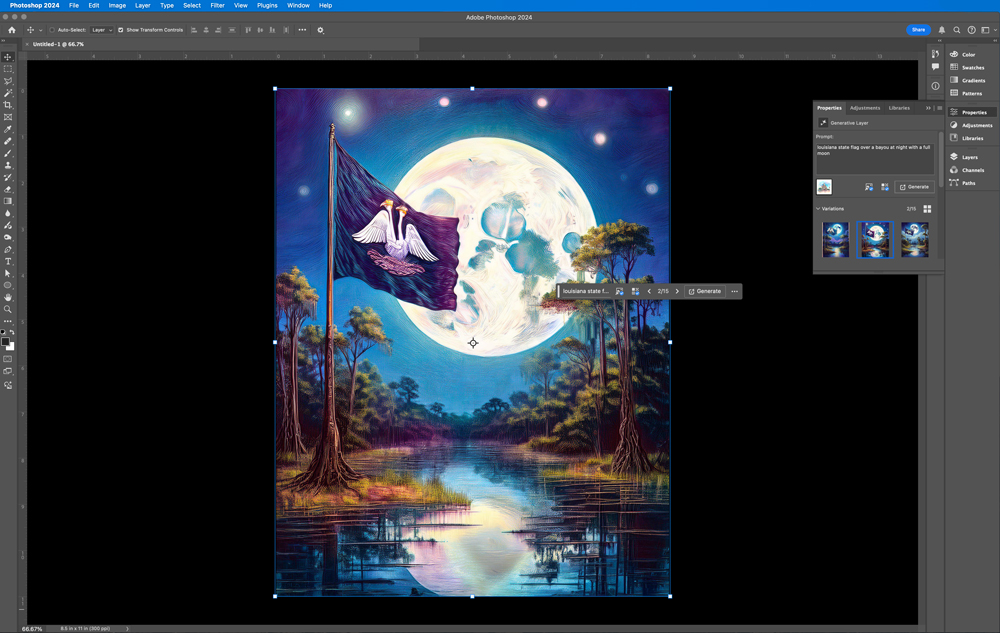
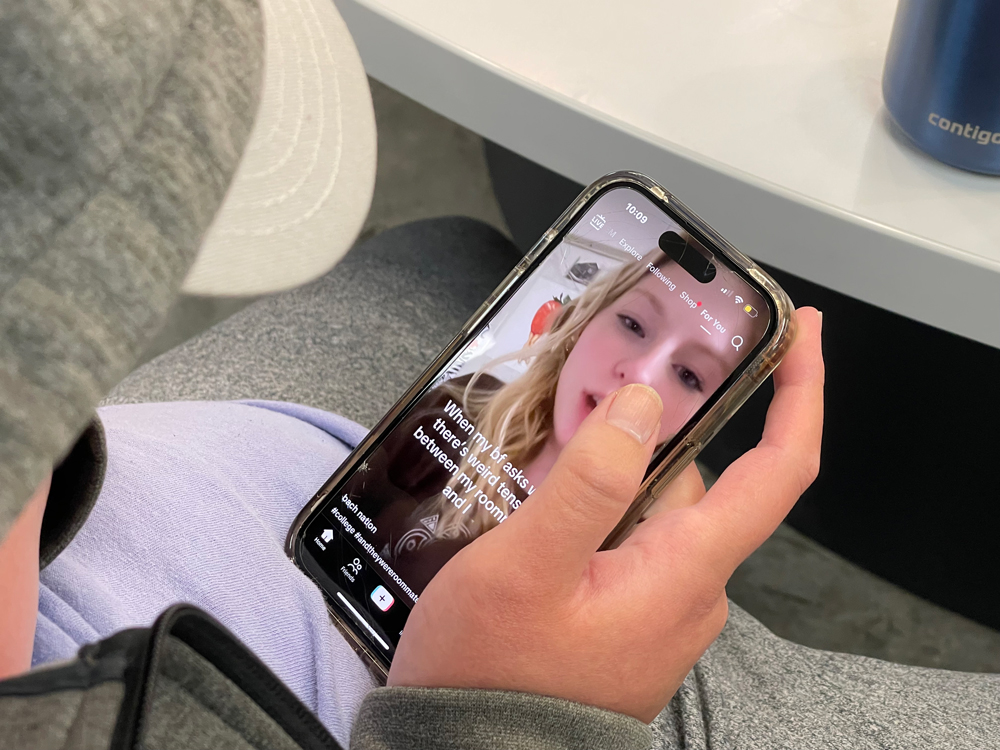
philip landry staff As Artificial Intelligence becomes more a part of our digital lives, more questions arise about its role in media and how to accurately detect it. While AI can enhance user experiences, distinguishing between human and AI-created content is increasingly vital. AI tools help businesses, influencers, and brands save time by producing posts, comments, and even images at scale. AI is used to keep content flowing, tailor posts for audiences, and can even spread misinformation. As AI grows more accessible, so does the challenge of identifying its presence online. According to the BBC, the best ways for someone to detect and identify AI in media is to pay attention to details, or to do a reverse image search. Similarly, an article put out by the Sante Fe Community College says to look for distorted imagery and watermarks, or to read the comments as AI can sometimes mimic human interaction to farm views, but it isn’t perfect. The most direct way to identify AI as well as misinformation in the media may be just thinking and observing for oneself. “We’ve always had people who manipulate the story to serve their agenda,” says Dr. Linda Martin, assistant professor of mass communication, “So maybe just old fashioned critical thinking or having a discerning eye… Knowing what good writing is.” “…just old fashioned critical thinking or having a discerning eye and knowing what good writing is.” linda martin, assistant professor of mass communication AI influence isn’t limited to social media. Customer service and video content are increasingly AI driven. Many companies are using chatbots to field customer questions, and often rely on pre-set answers, which is why some responses feel automated. In the film industry AI is powering Deep Fakes technology mostly used to alleviate costs in using computer graphics to change the way an actor looks. “Deep Fake AI use in movies is now being used to have a character age or be younger and it’s the same person,” says Melissa Remark, assistant professor of English, “In the past the CGI would have been really expensive and with Deep Fake AI technology it’s speeding that up.” As AI becomes more integrated into social media and our daily lives developing an eye for what’s real versus artificial is essential. Recognizing the patterns of AI-generated content and using verification tools can make it easier to identify content made with AI and understand a changing digital environment. AI image generated in Photoshop from the prompt, “louisiana state flag over a bayou at night with a full moon.” Student at Nicholls State University using AI on social media. Sophomore chemistry major Dylan Biffle uses AI to edit audio in the KNSU radio editing lab.